
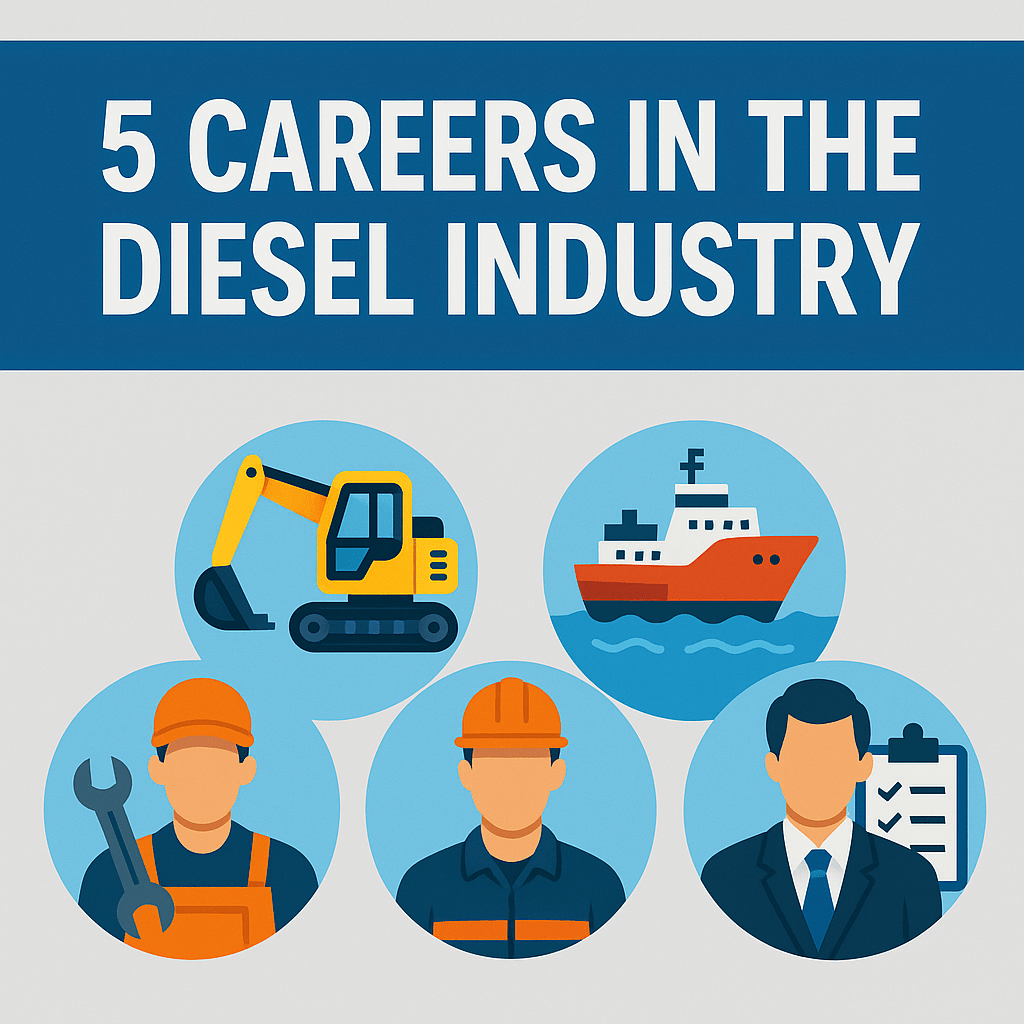
Over 70% of America’s freight moves by diesel-powered trucks, yet the industry faces a critical shortage of more than 80,000 skilled technicians. This gap represents unprecedented opportunity for those entering the field. From trucks that transport goods across the country to heavy equipment that builds roads to ships that move international cargo, diesel technology keeps industries running—and skilled professionals are more in demand than ever.
The diesel industry isn’t just about traditional mechanical work anymore. Today’s professionals work with hybrid systems, advanced emissions technology, and sophisticated diagnostic software alongside traditional repair skills. With strong wages, steady career paths, and opportunities to specialize in emerging technologies, the diesel field offers diverse pathways for long-term career growth.
Here are five rewarding careers in the diesel industry worth exploring:
1. Diesel Technician/Mechanic
Diesel technicians are the backbone of the industry, diagnosing, repairing, and maintaining diesel engines in trucks, buses, and heavy equipment. Modern technicians spend as much time working with laptops and diagnostic software as they do with wrenches, troubleshooting complex electronic systems and emissions controls.
A typical day might include: Running diagnostic tests on a truck’s engine management system in the morning, replacing a turbocharger on a delivery van after lunch, and updating software on a fleet of buses before closing.
Career progression: Entry-level tech → Lead technician → Shop supervisor → Service manager (typically 8-12 years)
Requirements:
- Diesel technology certificate or associate degree (12-24 months)
- ASE certification preferred
- Strong mechanical aptitude and problem-solving skills
Why it’s a good career:
- High demand nationwide with job security
- Opportunities to specialize in engines, fuel systems, emissions, or fleet maintenance
- Median salary around $55,000–$65,000 per year, with experienced techs earning $70,000+
- Salaries range from $45,000 in rural areas to $75,000+ in major metropolitan markets
2. Heavy Equipment Mechanic
While similar to diesel techs, heavy equipment mechanics focus on machines used in construction, agriculture, and mining—bulldozers, excavators, cranes, and tractors. This role often involves field service work, traveling to job sites to keep critical projects moving when equipment breaks down.
A typical day might include: Performing preventive maintenance on excavators at a construction site in the morning, then driving to a farm to repair a combine harvester’s hydraulic system.
Requirements:
- Technical training in heavy equipment or diesel technology
- Valid driver’s license and willingness to travel
- Physical stamina for outdoor work in various weather conditions
Why it’s a good career:
- Critical to construction, agriculture, and infrastructure projects
- Field service work often includes travel premiums and overtime opportunities
- Strong job security as infrastructure investment continues
- Median salary $60,000–$70,000 per year, with union jobs often reaching $80,000+
Considerations: Work involves exposure to weather, noise, and physically demanding conditions.
3. Marine Diesel Technician
Ships, ferries, and tugboats rely on massive diesel engines that require specialized knowledge. Marine diesel technicians maintain and repair these large-scale systems, working in shipyards, marinas, or traveling with vessels for at-sea repairs.
Requirements:
- Marine technology training or diesel program with marine focus
- Coast Guard certifications for certain positions
- Ability to work in confined spaces and comfort around water
Why it’s a good career:
- Niche specialty with limited competition
- Opportunities for international work and travel
- Growing offshore wind industry creating new opportunities
- Pay ranges from $65,000–$100,000+, especially with specialized certifications
- Highest salaries typically found near major ports (Seattle, Long Beach, Houston, Norfolk)
4. Power Generation Mechanic
Diesel engines don’t just move vehicles—they generate electricity that keeps hospitals, data centers, and emergency services running when the grid fails. Power generation mechanics service and repair diesel-powered generators, from portable units on construction sites to massive backup systems for critical facilities.
A typical day might include: Conducting monthly maintenance on hospital backup generators in the morning, then responding to an emergency call when a data center’s power system fails.
Requirements:
- Electrical knowledge in addition to diesel expertise
- Emergency response mindset and availability for on-call work
- Certification in electrical systems preferred
Why it’s a good career:
- Essential services that can’t be outsourced or delayed
- Growing demand as data centers and renewable energy storage expand
- Opportunities to specialize in portable generators, stationary systems, or renewable energy backup
- Salaries typically range from $60,000–$80,000+, with strong overtime and emergency call-out premiums
5. Fleet Maintenance Manager
Fleet managers oversee maintenance operations for trucking companies, transit agencies, or construction fleets rather than turning wrenches daily. They schedule service, manage parts inventories, track maintenance costs, ensure regulatory compliance, and lead teams of technicians while using fleet management software to optimize operations.
Career progression: This role typically requires 8-15 years of hands-on experience before moving into management.
Requirements:
- Extensive technical background in diesel systems
- Leadership and communication skills
- Knowledge of fleet management software and regulatory requirements
- Business and cost management understanding
Why it’s a good career:
- Combines technical expertise with leadership and business skills
- Growing demand as supply chains expand and fleet technology becomes more complex
- Opportunity to impact company operations and profitability
- Salaries often range from $70,000–$90,000+, with larger fleets offering $100,000+
The Evolving Industry
Today’s diesel professionals work with increasingly sophisticated technology. Modern engines integrate hybrid systems, advanced emissions controls, and telematics that monitor performance in real-time. This evolution means ongoing learning is essential, but it also creates opportunities for specialization and higher wages for those who stay current with emerging technologies.
The push toward cleaner emissions has created entirely new specializations in diesel exhaust fluid systems, particulate filters, and selective catalytic reduction—areas where skilled technicians command premium wages.
Getting Started
Immediate next steps:
- Research local programs: Visit ASE.com to find accredited diesel technology programs in your area
- Explore apprenticeships: Many dealerships and fleets offer paid apprenticeships that combine work and training
- Visit facilities: Contact local truck dealerships, construction companies, or ports to arrange informational interviews
- Consider specializations: Research which areas (marine, power generation, emissions) have the highest demand in your region
Timeline expectations: Most diesel technology programs can be completed in 12-24 months, leading to entry-level positions with strong advancement potential.
Final Thoughts
The diesel industry offers a unique combination of job security, competitive wages, and diverse career paths that can’t be outsourced. Whether you prefer hands-on problem-solving, specialized technical work, or eventually moving into leadership roles, diesel technology provides a foundation for long-term career growth.
With the current shortage of skilled professionals and the ongoing evolution of diesel technology, now is an ideal time to enter this vital industry that literally keeps America moving.
 Learn Diesel