
Author: Lester Burkes

  • Hyzon Motors: What Happened to the Hydrogen Truck Maker

    Hyzon Motors: What Happened to the Hydrogen Truck Maker

    Updated October 2026: Hyzon Motors is no longer in business. In late March 2025, shareholders approved selling off the company’s assets and dissolving it, and its remaining assets went to liquidation. We’ve kept the original 2023 article below for the record. The lesson for technicians: new powertrains come and go, but diesel and natural gas are still the backbone of heavy-duty work, so those skills are still where the jobs are.

    Introduction

    There are few names in the zero-emission vehicle industry that have been creating as much buzz as Hyzon Motors. In the race towards a cleaner, greener future, this trailblazing company is at the forefront, harnessing the power of hydrogen fuel cells to revolutionize the transportation sector. With its pioneering hydrogen engines, Hyzon Motors is setting a new standard for clean energy, proving that sustainability and performance can indeed go hand in hand.

    The Hyzon Motors Journey

    Founded in 2003 as part of Singapore’s Horizon Fuel Cell Technologies, Hyzon Motors is a global leader in hydrogen energy. After two decades of research and development in fuel cell technology, the company was spun off in 2020 to focus on the production of zero-emission commercial vehicles. Headquartered in Honeoye Falls, New York, Hyzon Motors is geared towards the development of hydrogen fuel cell-powered heavy vehicles, a market niche with significant potential for reducing carbon emissions.

    Hydrogen Engines: A Greener Future

    Traditional combustion engines operate by burning fossil fuels, releasing harmful carbon dioxide into the atmosphere. Hyzon’s hydrogen engines, however, take a different approach. They utilize hydrogen fuel cells, which produce electricity through a chemical reaction between hydrogen and oxygen, to power the vehicle. This process results in water as the only byproduct, marking a significant departure from the pollutant emissions characteristic of traditional engines.

    Moreover, the hydrogen used as fuel can be produced from a variety of renewable energy sources, making the entire life-cycle of a hydrogen-powered vehicle potentially carbon-neutral. This is the central appeal of Hyzon Motors’ technology: a complete, sustainable transportation solution that doesn’t compromise on power or range.

    Hyzon Motors’ Offerings

    Hyzon’s innovative lineup includes an array of heavy-duty vehicles, from trucks and buses to vans, powered by hydrogen fuel cell technology. With a focus on commercial applications, these vehicles are designed to offer similar, if not superior, performance to their diesel counterparts, but without the accompanying pollution.

    These vehicles also address one of the major drawbacks of electric vehicles: long charging times. Hydrogen-powered vehicles can be refueled in a matter of minutes, comparable to conventional refueling times for gasoline or diesel vehicles. This makes them an ideal choice for commercial operations, where minimizing downtime is a priority.

    Hyzon’s technology is not just limited to the engines. They have developed a comprehensive suite of technologies for the entire hydrogen ecosystem, including refueling infrastructure and hydrogen production methods. By considering the entire supply chain, Hyzon is working towards a future where hydrogen is a practical and accessible fuel source for all.

    Conclusion

    The future of transportation lies in zero-emission vehicles, and Hyzon Motors is at the vanguard of this shift. With their state-of-the-art hydrogen engines, they are transforming the way we think about commercial transportation, offering a truly green alternative that doesn’t compromise on performance or practicality.

    As we look towards a future where sustainability is not just an option but a necessity, the work of companies like Hyzon Motors becomes ever more critical. Their hydrogen engines are a testament to the power of innovation and a beacon of hope for a cleaner, greener future.

    Related: Cat C13D, Caterpillar’s new 13-liter off-highway diesel

    Getting ready for ASE certification? Read our ASE T2 Diesel Engines study guide, then take a free T2 practice test with instant explanations for every answer.
  • Cat C13D: Caterpillar’s New 13-Liter Off-Highway Diesel

    Cat C13D: Caterpillar’s New 13-Liter Off-Highway Diesel

    Updated October 2026: The C13D is on track for full production in 2026. We added more details below.

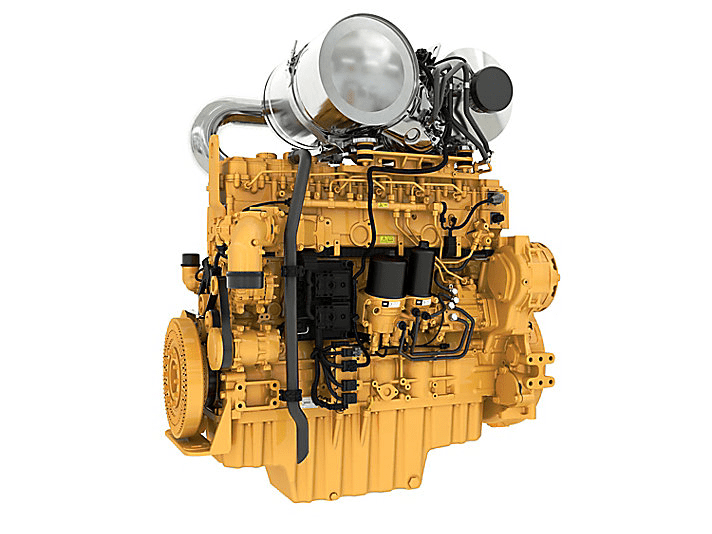
    Caterpillar has introduced its new 13-liter diesel engine platform, the Cat C13D, designed for heavy-duty off-highway equipment such as rock crushers, screeners, and woodchippers.

    The C13D engine offers eight power ratings from 456 to 690 hp and up to 3,200 Nm of peak torque. Available for early OEM pilots in 2025 and expected to go into production in 2026, the platform allows OEMs to downsize the engine and simplify their design, assembly, and supply chain requirements.

    Caterpillar will offer factory-mounted engine aftertreatment and cooling packs to reduce installation and validation costs for its C13D engine. The engine meets emissions standards in highly regulated markets and offers up to 20% more power and up to 25% more low-speed torque than previous Cat engines in its power class. It features a variable geometry turbocharger, a common-rail fuel system with ‘zero static leak’ fuel injectors, and an 18:1 compression ratio. The engine platform can use renewable fuels and is designed to accommodate future development of natural gas and hydrogen fuel capabilities.

    To Learn more click here!

    More C13D details

    • Emissions: meets EU Stage V, U.S. EPA Tier 4 Final, China Nonroad Stage IV, Korea Stage V and Japan 2014 standards
    • Tough conditions: rated to work at altitudes up to 12,000 feet and in temperatures from -40°F to 140°F
    • Lower upkeep: service intervals up to 1,000 hours with reduced fluid use
    • Eight ratings from 340 to 515 kW (456 to 690 hp), with up to 3,200 Nm of peak torque

    Getting ready for ASE certification? Read our ASE T2 Diesel Engines study guide, then take a free T2 practice test with instant explanations for every answer.

  • Air Disc Brake Replacement Tips for Semi Trucks

    Air disc brakes are becoming increasingly popular in the trucking industry due to their superior performance and reduced maintenance requirements. However, adjusting or changing the air disc brakes on a semi-truck can be intimidating for those unfamiliar with the process. In this blog post, we will guide you through the steps to safely and effectively adjust or change air disc brakes on a semi-truck.

    Prepare Your Tools and Equipment

    Before starting the process, make sure you have all the necessary tools and equipment. You will need a torque wrench, a lug wrench, a jack stand, a hammer, a brake adjuster tool, and replacement brake pads if you are changing the brakes. Additionally, make sure you have a clean and flat surface to work on, and wear the appropriate safety gear such as gloves and eye protection. The most common Air Disc Brake Setup is by Bendix and you can find the brake manual by following this link!

    Safety

    All too often people hurt themselves doing brake jobs by not paying attention to detail. You may be in a bit of a rush but you need to make sure you do a pre inspection on your jack stands and yes I do mean use Jack Stands do not just use a jack that is the fastest way to hurt yourself.

    Removing Wheels and Tires

    This is simple make sure you keep all the lug nuts and studs with the wheel end it came off of.

    Inspect the Brake Components

    Before you tear it apart take a quick picture. This will help you if you can’t figure out how something was oriented or forgot where it went. Also be sure to inspect the caliper boots for any tears. You can find the inspect disc out of service specifications in the attachment in the first paragraph. Also do not adjust the pistons out that far to inspect the boot because they can fall out of the caliper and you will have to rebuild the whole caliper to get them back in!

    Cleaning and Reassembly

    1. Don’t go all crazy with the brake clean!
    2. Don’t put the pads in backwards! They will slide right in backwards!

    Adjust the Brake Pads

    To adjust the brake pads, use the brake adjuster tool to turn the adjuster bolt until the pads are snug against the rotor. Then back it off about 3 clicks or until there is no drag. Always check the manufacturer’s spec for your caliper. Make sure you do not over-tighten the adjuster bolt as this can cause the brakes to drag and overheat. Once the brake pads are adjusted, reassemble the wheel and tire assembly.

    Torque the Wheel Nuts

    USE A TORQUE WRENCH! USE A TORQUE WRENCH LOL. That is not a 1 inch impact! Come on now lets be professionals.

    Test the Brakes

    Be sure to get the brakes hot on the test to help the pads start to break in. Yes brake pads have a break in period how long that is depends on the driving habits!

    If you need more help watch this video of me doing it on a mock up.

    Peace!

    Getting ready for ASE certification? Read our ASE T2 Diesel Engines study guide, then take a free T2 practice test with instant explanations for every answer.