Blog

  • ASE T6 Electrical/Electronic Systems Study Guide: What’s on the Test

    ASE T6 Electrical/Electronic Systems Study Guide: What’s on the Test

    The ASE T6 Electrical/Electronic Systems test is the one a lot of heavy-duty techs put off, but it doesn’t have to be scary. Most of the test comes down to a few skills: reading a wiring diagram, using a meter correctly and doing a voltage drop test. Get those down and the rest falls into place.

    Here’s what’s on the T6, where the points are and how to study for it.

    The T6 test at a glance

    The T6 has about 50 scored questions, plus around 10 unscored research questions, with about 90 minutes to finish.

    Content areaScored questions
    A. General Electrical/Electronic System DiagnosisAbout 14
    B. Battery and Starting System Diagnosis and RepairAbout 11
    C. Charging System Diagnosis and RepairAbout 7
    D. Lighting Systems Diagnosis and RepairAbout 6
    E. Related Vehicle Systems Diagnosis and RepairAbout 12
    TotalAbout 50

    You’ll need two years of hands-on work experience to be certified, and a diesel program can count for up to one year. Registration is $34 per order plus $62 per test.

    A. General Electrical/Electronic Diagnosis (about 14 questions)

    This is the biggest section and the foundation for everything else.

    • Ohm’s law: volts = amps × ohms. Know how added resistance in a circuit lowers current and dims a light or slows a motor.
    • Meter use: measure voltage in parallel, current in series and resistance with the circuit unpowered.
    • Voltage drop testing: the best way to find a bad connection or ground. Test with the circuit loaded. A good connection drops very little voltage, often a few tenths of a volt or less.
    • Wiring diagrams: follow power from the source through fuses, switches and loads to ground.
    • Parasitic draw: how to measure key-off battery drain and isolate the circuit by pulling fuses.

    B. Battery and Starting Systems (about 11 questions)

    • Battery testing: open-circuit voltage (about 12.6 volts at full charge), load testing and conductance testers.
    • Battery banks: most heavy trucks run several 12-volt batteries in parallel. Know how parallel and series connections change voltage and capacity, and why one bad battery can drag down the bank.
    • Cranking circuit: slow cranking can be batteries, cables, connections or the starter. Voltage drop on the positive and ground sides tells you which.
    • Starter controls: magnetic switch, solenoid and neutral safety or clutch switch.

    C. Charging System (about 7 questions)

    • Output testing: measure charging voltage at the batteries and alternator output under load.
    • Charging circuit voltage drop: high resistance in the output or ground cable can make a good alternator look bad.
    • Diodes and ripple: a failed diode causes low output and excessive AC ripple voltage.
    • Belt drive: slipping belts and worn tensioners cause low output.

    D. Lighting Systems (about 6 questions)

    • Common problems: dim or flickering lights from bad grounds and corroded connectors. Lights that feed back into other circuits when a ground is missing.
    • Trailer wiring: the 7-way connector and trailer light cord, including which pin powers ABS on the trailer.
    • LED lighting: why LEDs can cause bulb-out warnings or turn signals that flash too fast.

    E. Related Vehicle Systems (about 12 questions)

    • Data networks: J1939 CAN bus. The backbone has two 120-ohm terminating resistors, so you should measure about 60 ohms across the two data wires with the key off.
    • Gauges and sensors: sending units, sensor reference voltage (often 5 volts) and signal ground.
    • Body systems: power windows, door locks, wipers, mirrors and horns.
    • Scan tools: reading active and inactive codes and using live data to confirm a repair.

    Try a few practice questions

    Question 1

    An engine cranks slowly. Battery voltage is good, but voltage drop on the positive cable from the battery to the starter is 1.2 volts while cranking. What is the most likely cause?

    • A. A weak starter motor
    • B. High resistance in the positive cable or its connections
    • C. A bad ground at the alternator
    • D. A faulty neutral safety switch

    Answer: B. A 1.2-volt drop is far too high. Clean or replace the cable and connections, then retest.

    Question 2

    With the key off, a technician measures resistance across the two J1939 data wires and gets about 120 ohms. What does this mean?

    • A. The network is normal
    • B. One terminating resistor is missing or open
    • C. Both terminating resistors are shorted
    • D. The batteries are low

    Answer: B. A healthy backbone with two 120-ohm terminators reads about 60 ohms. A 120-ohm reading means one terminator is missing or open.

    Question 3

    Technician A says current is measured with the meter in series with the circuit. Technician B says resistance should be measured with the circuit powered. Who is right?

    • A. Technician A only
    • B. Technician B only
    • C. Both A and B
    • D. Neither A nor B

    Answer: A. Technician A only. Resistance must be measured with the circuit unpowered, or the reading will be wrong and the meter can be damaged.

    A simple 4-week study plan

    • Week 1, fundamentals: Ohm’s law, meter use, reading wiring diagrams and voltage drop testing.
    • Week 2, batteries and starting: battery testing, battery banks, cranking circuit diagnosis and parasitic draw.
    • Week 3, charging, lighting and networks: alternator testing, lighting and trailer wiring, and J1939 basics.
    • Week 4, practice and review: timed practice tests and review every question you missed.

    Keep going with the ASE T-Series

    Working toward Master Medium/Heavy Truck Technician? Check out our ASE T2 Diesel Engines study guide, then take a free practice test with instant explanations for every answer. T6 practice tests are coming soon.
  • ASE T8 Preventive Maintenance Inspection Study Guide: What’s on the Test

    ASE T8 Preventive Maintenance Inspection Study Guide: What’s on the Test

    The ASE T8 Preventive Maintenance Inspection (PMI) test is a great first T-Series certification. It covers the whole truck from bumper to mud flaps, and it tests the inspection skills shops use every day: spotting a problem before it turns into a breakdown, a roadside violation or a crash.

    Here’s what’s on the T8, where the points are and how to study for it.

    The T8 test at a glance

    The T8 has about 50 scored questions, plus around 10 unscored research questions, with about 75 minutes to finish. Frame and chassis is the biggest section by far, so spend your study time there.

    Content areaShare of testAbout how many questions
    A. Engine Systems20%10
    B. Cab and Hood10%5
    C. Electrical/Electronics20%10
    D. Frame and Chassis44%22
    E. Road/Operational Test6%3

    Like the other T-Series tests, you need two years of hands-on work experience to be certified, and a diesel program can count for up to one year. Registration is $34 per order plus $62 per test.

    A. Engine Systems (about 10 questions)

    • Fluids: oil level and condition, coolant level, freeze protection checked with a refractometer, and coolant additive (SCA) levels with test strips.
    • Belts and hoses: cracks, glazing, tension and tensioner operation. Soft, swollen or collapsed hoses.
    • Fuel system: leaks, water separator draining and fuel filter service intervals.
    • Air intake and exhaust: air filter restriction indicator, charge air cooler leaks, exhaust leaks, and DPF and DEF system checks.
    • Leaks and noises: oil, coolant, fuel and exhaust leaks, and what each one tells you.

    B. Cab and Hood (about 5 questions)

    • Safety items: seat belts, seats, mirrors, horn, wipers and washers, defroster and door latches.
    • Gauges and warning lights: all instruments working, including the low-air warning.
    • Hood and body: hood latches and tilt mechanism, steps and grab handles, and cab mounts.
    • HVAC: cabin filter, blower operation and A/C performance.

    C. Electrical/Electronics (about 10 questions)

    • Batteries: state of charge (about 12.6 volts at rest for a fully charged 12-volt battery), load testing, clean and tight cables, and hold-downs.
    • Starting and charging: cranking voltage, charging voltage at the batteries, and voltage drop on cables.
    • Lighting: every exterior light and reflector, the trailer light cord, and the 7-way connector.
    • Diagnostics: checking for active fault codes with a scan tool as part of the PMI.

    D. Frame and Chassis (about 22 questions)

    This is almost half the test. Know your measurements and what makes a truck unsafe to drive.

    Air brakes

    • Pushrod stroke checks at full application, and the adjustment limit for each brake chamber size.
    • Air leak-down and build-up tests, governor cut-in and cut-out, and low-air warning operation.
    • Drum and lining condition, air lines and chafing, and air dryer and reservoir draining.

    Steering and suspension

    • Steering wheel free play, tie rod ends, drag link, kingpins and steering gear mounting.
    • Springs, U-bolts, shocks, air springs and ride height. Broken leaves and cracked hangers.

    Tires, wheels and hubs

    • Tread depth: at least 4/32 inch on steer tires and 2/32 inch on all others, under federal rules.
    • Inflation, mismatched duals, sidewall damage and cracked wheels.
    • Hub oil level and leaks, and wheel bearing end play.

    Driveline, frame and fifth wheel

    • U-joints, driveshaft slip joints and center bearings.
    • Frame cracks, loose crossmembers and fifth-wheel locking jaw adjustment.

    E. Road/Operational Test (about 3 questions)

    • Brakes stop straight, the parking brake holds, and steering returns to center.
    • Shifting, clutch, engine power and any noises or vibrations.
    • Gauge readings at operating temperature, and checking for leaks after the drive.

    Try a few practice questions

    Question 1

    During a PMI, a steer tire measures 3/32 inch of tread depth. What should the technician do?

    • A. Pass it because it’s above 2/32 inch
    • B. Record it and replace the tire before the truck goes back in service
    • C. Rotate it to a drive position and pass it
    • D. Increase tire pressure

    Answer: B. Steer tires need at least 4/32 inch of tread under federal rules. Below that, the tire needs to be replaced.

    Question 2

    Technician A says coolant freeze protection should be checked with a refractometer. Technician B says SCA levels in conventional coolant can be checked with test strips. Who is right?

    • A. Technician A only
    • B. Technician B only
    • C. Both A and B
    • D. Neither A nor B

    Answer: C. Both are standard PMI checks.

    Question 3

    During a PMI, a 12-volt battery reads 12.2 volts after the truck has sat overnight. What does this mean?

    • A. The battery is fully charged
    • B. The battery is about half charged and needs charging and testing
    • C. The alternator is overcharging
    • D. The battery is ready for a load test

    Answer: B. A fully charged 12-volt battery reads about 12.6 volts at rest. Charge it, then load test it before deciding whether to replace it.

    A simple 4-week study plan

    • Week 1, frame and chassis brakes: pushrod stroke limits, air system tests and foundation brake inspection.
    • Week 2, the rest of frame and chassis: steering, suspension, tires, wheels, hubs and the fifth wheel.
    • Week 3, engine and electrical: fluids, belts, cooling, batteries, charging and lighting.
    • Week 4, cab, road test and practice: cab safety items, road test checks and timed practice tests.

    Keep going with the ASE T-Series

    After the T8, many techs move on to the T2 Diesel Engines test. Read our ASE T2 Diesel Engines study guide, then take a free practice test with instant explanations for every answer. T8 practice tests are coming soon.
  • ASE T4 Brakes Study Guide: What’s on the Test and How to Pass

    ASE T4 Brakes Study Guide: What’s on the Test and How to Pass

    The ASE T4 Brakes test is where heavy-duty techs prove they can keep an 80,000-pound truck stopping safely. Air brakes make up most of the test, so if you can diagnose an air system from the compressor to the slack adjuster, you’re most of the way there.

    This guide covers what’s on the T4, where the points are, the concepts that show up again and again, and a simple plan to get ready.

    The T4 test at a glance

    The T4 has about 50 scored questions, plus around 10 unscored research questions mixed in. You won’t know which ones don’t count, so treat every question like it does. You get about 75 minutes.

    Content areaScored questions
    A. Air BrakesAbout 32
    B. Hydraulic BrakesAbout 11
    C. ABS, Traction Control, Stability Control and Collision WarningAbout 7
    TotalAbout 50

    To earn the certification, you also need two years of hands-on work experience. A diesel or heavy-equipment program can count for up to one of those years. Registration is $34 per order plus $62 per test.

    A. Air Brakes (about 32 questions)

    This is almost two-thirds of the test. Know the whole system: how air is made, stored, delivered and released.

    Air supply

    • Compressor and governor: the governor tells the compressor when to pump (cut-in) and when to stop (cut-out). Typical cut-out is around 120 to 135 psi. Know how to diagnose a governor that won’t cut out versus a compressor that can’t keep up.
    • Air dryer: removes moisture and oil before air reaches the tanks. A dryer that never purges, or tanks full of water, point to dryer or purge-valve problems. Oil in the tanks usually points back to the compressor.
    • Reservoirs: supply (wet), primary and secondary tanks. Know the check valves that keep one circuit from draining the other.
    • Leak-down and build-up tests: know how to run a static and an applied leak test and what pressure drop per minute is acceptable, plus build-up time and low-air warning operation.

    Service, parking and emergency brakes

    • Valves: foot (treadle) valve, relay valve, quick-release valve, spring brake control valve and tractor protection valve. Questions often ask which valve causes a slow apply or slow release on one axle.
    • Spring brakes: held off by air, applied by spring force. Know how to cage a spring brake safely before working on it.
    • Tractor protection: know what happens to the trailer supply line when tractor air pressure drops.

    Foundation brakes

    • S-cam drum brakes: camshaft bushings, rollers, return springs and shoe wear. Know drum discard dimensions (stamped on the drum) and how to measure them.
    • Automatic slack adjusters: check pushrod stroke at a full application. An out-of-adjustment automatic slack means something is wrong with the slack or the foundation brake. Don’t just keep adjusting it by hand.
    • Air disc brakes: pad wear, rotor cracks and caliper slide function.

    B. Hydraulic Brakes (about 11 questions)

    Medium-duty trucks, buses and many vocational units still use hydraulic brakes, often with a hydraulic power assist.

    • Master cylinder and lines: spongy pedal versus pedal that sinks slowly. Air in the system versus internal master cylinder leakage.
    • Power assist: vacuum boosters and hydraulic boosters (powered by the power steering pump), plus the electric backup pump many systems use.
    • Bleeding: correct sequence and when a scan tool is needed to bleed an ABS unit.
    • Disc and drum service: rotor thickness, runout and parallelism, and caliper slide problems that cause uneven pad wear.

    C. ABS, Traction Control, Stability Control and Collision Warning (about 7 questions)

    • Wheel speed sensors: air gap, resistance checks and AC voltage output while spinning the wheel. A loose sensor or excessive bearing end play can set codes.
    • Modulator valves: how they hold or release air at a wheel, and how to test them.
    • Codes: reading blink codes and using a scan tool. Know which faults put the ABS lamp on.
    • Stability control and collision mitigation: steering angle and yaw sensors, and radar or camera alignment after a front-end repair or bumper replacement.

    Try a few practice questions

    Question 1

    An air brake system takes too long to build pressure from 85 to 100 psi. Technician A says a leaking reservoir drain valve could cause this. Technician B says a worn compressor could cause this. Who is right?

    • A. Technician A only
    • B. Technician B only
    • C. Both A and B
    • D. Neither A nor B

    Answer: C. Both A and B. Any leak or a compressor that can’t pump enough air will slow build-up. Do a leak test first, then check compressor output.

    Question 2

    A truck with automatic slack adjusters has one brake with excessive pushrod stroke. What should the technician do first?

    • A. Manually adjust the slack and release the truck
    • B. Replace all slack adjusters on the axle
    • C. Inspect the foundation brake and the slack adjuster for the cause
    • D. Increase governor cut-out pressure

    Answer: C. An automatic slack that’s out of adjustment is a symptom. Find the cause, such as worn cam bushings or a failed slack, before returning the truck to service.

    Question 3

    An ABS wheel speed sensor reads correct resistance, but the ABS sets a fault for that wheel at road speed. Which is the most likely cause?

    • A. Excessive sensor air gap
    • B. Low battery voltage
    • C. Wrong brake fluid
    • D. Weak spring brake

    Answer: A. If the sensor has pushed back away from the tone ring, its signal is too weak at speed even though resistance tests fine. Push the sensor back in and check wheel bearing end play.

    A simple 4-week study plan

    • Week 1, air supply: compressor, governor, dryer, reservoirs and leak tests. This is the biggest piece of the test.
    • Week 2, valves and foundation brakes: trace air through each valve on a system diagram, then study slack adjusters, S-cams and air disc brakes.
    • Week 3, hydraulic brakes and ABS: master cylinders, boosters, bleeding, wheel speed sensors and modulators.
    • Week 4, practice and review: take timed practice tests, then go back over every question you missed.

    Keep going with the ASE T-Series

    Working on your full Medium/Heavy Truck certification? Start with our ASE T2 Diesel Engines study guide, then take a free practice test with instant explanations for every answer. T4 Brakes practice tests are coming next.

  • ASE T2 Diesel Engines Study Guide: What’s on the Test and How to Pass

    ASE T2 Diesel Engines Study Guide: What’s on the Test and How to Pass

    The ASE T2 Diesel Engines test is one of the core certifications in the Medium/Heavy Truck (T-Series). Pass it along with the other T-Series tests and you’re on your way to Master Medium/Heavy Truck Technician status. It also tells every shop you apply to that you can do more than change oil.

    This guide breaks down what’s on the test, where the points are, and how to study so your time goes where the questions are.

    The T2 test at a glance

    The T2 has 40 scored questions across seven content areas. ASE may also include a few extra unscored questions it’s testing for future exams. You won’t know which ones they are, so treat every question like it counts.

    Content areaScored questions
    A. General Engine Diagnosis7
    B. Cylinder Head and Valve Train4
    C. Engine Block3
    D. Lubrication System4
    E. Cooling System7
    F. Air Induction, Exhaust Systems and Engine Brakes7
    G. Fuel System8
    Total40

    Where the points are: Fuel, Air Induction/Exhaust, Cooling, and General Diagnosis add up to 29 of the 40 questions. Head, block, and lube are only 11 combined. If your study time is limited, spend most of it on diagnosis, air, fuel, and cooling.

    A. General Engine Diagnosis (7 questions)

    This section tests whether you can read the engine before you pick up a wrench: fluid levels and condition, leaks, noises, vibration, no-start and hard-start complaints, power problems, and pulling codes and live data.

    • Know your smoke colors. Black smoke means too much fuel for the air available, so think air restriction, boost leaks, a bad turbo, or overfueling. Blue smoke means oil is being burned. White smoke usually means fuel that isn’t burning completely, often a cold engine, low compression, or timing problems. White smoke can also be coolant getting into the cylinders.
    • Diagnose in order. Expect “what should the technician do first?” questions. The answer is almost always the simplest, least invasive check: verify the complaint, check fluids, pull codes, then test.
    • Codes point you somewhere. They don’t replace testing. A code tells you which circuit or system to look at. It doesn’t tell you which part to replace.

    B. Cylinder Head and Valve Train (4 questions)

    This section covers head removal and inspection, checking for cracks and warpage, valves, guides, seats and springs, injector sleeves and protrusion, overhead cams, and adjusting valve bridges and valve lash.

    • Know that a valve bridge (crosshead) is adjusted before setting valve clearance on engines that have them.
    • Know how head warpage is checked: a precision straightedge and feeler gauge across the mating surface, compared against the manufacturer’s spec.
    • Injector sleeve problems can show up as coolant in the fuel or fuel in the coolant. Remember that connection.

    C. Engine Block (3 questions)

    This is the biggest task list and the fewest questions. It covers crankcase pressure testing, liners and liner height, crankshaft and bearings, gear train timing, pistons and rings, piston cooling jets, the vibration damper, and the flywheel housing.

    • Crankcase pressure (blow-by): high readings point to worn rings or liners. They can also come from other sources pushing air into the crankcase, like a leaking turbocharger seal or air compressor.
    • Liner protrusion (height) is measured and has to be within spec, or you’ll have head gasket problems.
    • A damaged or out-of-spec vibration damper can lead to crankshaft damage. Know that it’s an inspection item.

    D. Lubrication System (4 questions)

    This section covers oil pressure testing and sensors, oil level, condition and consumption, the oil pump and pickup, pressure regulator and relief valves, the oil cooler, turbo lubrication, and choosing the right oil.

    • Confirm a low oil pressure reading with a mechanical gauge before condemning the engine. The sensor or gauge could be the problem.
    • Know what a stuck regulator or relief valve does to oil pressure, both when it’s stuck open and when it’s stuck closed.
    • Coolant in the oil can come from an oil cooler failure. Don’t jump straight to a head gasket.

    E. Cooling System (7 questions)

    This section covers coolant type, level and condition, temperature sensors, belts and tensioners, thermostats, flushing and bleeding, coolant filters, water pumps, radiator and cap pressure testing, and fan drives and shrouds.

    • A refractometer is the accurate way to check coolant freeze protection.
    • Don’t mix coolant types. Know the difference between conventional coolant that needs supplemental coolant additives (SCAs) and extended-life coolant.
    • Overheating questions often come down to airflow: a missing fan shroud, a fan clutch that isn’t engaging, or plugged radiator fins.
    • A thermostat stuck open causes an engine that runs cold, not one that overheats.

    F. Air Induction, Exhaust Systems and Engine Brakes (7 questions)

    This section covers intake restriction and leak tests, boost tests, exhaust back pressure, turbochargers (including variable geometry), charge air coolers, exhaust aftertreatment, intake heaters and glow plugs, EGR, and engine brakes.

    • Test intake restriction at full load and rated speed, because that’s when the engine pulls the most air. A test at idle won’t show a restriction.
    • A leaking charge air cooler means low boost, low power, and black smoke. Know how it’s pressure tested.
    • High exhaust back pressure, for example from a plugged DPF, causes low power and high exhaust temperatures.
    • Know the basics of how compression (engine) brakes work and when they’re adjusted.

    G. Fuel System (8 questions)

    This is the biggest section. It’s split between the fuel supply system (tanks, lines, transfer pump, filters, water separators, priming and bleeding) and the electronic fuel management system (circuits, sensors, scan tools, unit injectors, HEUI, and common rail).

    • Restriction on the suction side of the transfer pump and air getting into the supply system are classic causes of low power and hard starting.
    • Know your electrical basics: voltage drop testing, measuring resistance, and checking power and grounds before replacing a module.
    • A cylinder cutout/contribution test with diagnostic software is the fastest way to find a weak cylinder or bad injector.
    • Common rail systems run extremely high pressures. Follow the safety procedures before opening any high-pressure line.

    Try a few practice questions

    1. A diesel engine produces black smoke under load. Which of these is the LEAST likely cause?
    A. Restricted air filter
    B. Leaking charge air cooler
    C. Thermostat stuck open
    D. Damaged turbocharger

    Answer: C. A stuck-open thermostat makes the engine run cold. The other three all reduce airflow, which causes black smoke.

    2. Crankcase pressure is above spec. Technician A says worn piston rings could be the cause. Technician B says a leaking turbocharger seal could be the cause. Who is right?
    A. A only
    B. B only
    C. Both A and B
    D. Neither A nor B

    Answer: C. Anything that pushes combustion gases or pressurized air into the crankcase raises crankcase pressure.

    3. Which tool gives the most accurate reading of coolant freeze protection?
    A. Hydrometer
    B. Refractometer
    C. Test strips
    D. Infrared thermometer

    Answer: B. A refractometer is the most accurate. Test strips are useful for checking SCA levels.

    4. An intake air restriction test is most accurate when performed:
    A. At low idle
    B. At high idle with no load
    C. At rated speed under full load
    D. With the engine off

    Answer: C. Restriction shows up when airflow is highest.

    5. An electronically controlled engine has a miss at idle. What is the most efficient first test?
    A. Replace all injectors
    B. Perform a cylinder cutout/contribution test
    C. Pull the cylinder head
    D. Replace the fuel filters

    Answer: B. It tells you which cylinder is the problem before you spend money on parts.

    A simple 4-week study plan

    • Week 1: General diagnosis and the fuel system. That’s 15 questions’ worth.
    • Week 2: Air induction, exhaust, aftertreatment, and engine brakes.
    • Week 3: Cooling and lubrication.
    • Week 4: Head, valve train, and block, then full-length practice tests. Review every question you miss until you understand why the right answer is right.

    Read the “Technician A / Technician B” questions slowly. Decide whether each statement is true on its own before you look at the answer choices.

    Always check the official ASE Medium/Heavy Truck study guide at ase.com for the current task list before your test date. ASE updates its specifications from time to time.

    Get the full ASE prep series

    This is the first in a series of T-Series study guides on Learn Diesel, with practice tests on the way. Sign up on the homepage to get each new guide when it’s published.

    Related: 5 Careers in the Diesel Industry

  • EPA Issues Game-Changing Relief for Diesel Equipment Operators

    EPA Issues Game-Changing Relief for Diesel Equipment Operators

    Updated October 2026: Since this post ran, EPA has kept moving on DEF. The August 2025 guidance set the three-stage derate schedule below. In March 2026, EPA dropped the requirement for DEF (urea) quality sensors, one of the most failure-prone parts of SCR systems, and said manufacturers can push software updates to existing trucks to remove them without it counting as tampering. In July 2026, EPA proposed eliminating DEF derates entirely and replacing them with audible warnings by 2029. That proposal is not final yet, so watch for the final rule.

    Farmers and truckers across America can finally breathe easier thanks to new guidance from the EPA that addresses a longstanding problem with diesel exhaust fluid (DEF) systems.

    The Problem That’s Been Plaguing Operators

    Since the early 2010s, diesel vehicles and equipment have been required to use Selective Catalytic Reduction (SCR) technology that runs on DEF to reduce nitrogen oxide emissions. While this technology has been tremendously successful—reducing nitrogen oxide (NOx) emissions by up to 99%—it came with a major operational headache.

    When DEF sensors failed or DEF ran low, operators faced a harsh reality: they had just four hours before their equipment would shut down completely. Picture a farmer mid-harvest in an Iowa field, losing precious daylight and yield because their tractor suddenly stopped working. Or a trucker whose 18-wheeler slowed to a crawl on the highway with no warning.

    The Solution: Practical Relief That Works

    The Trump administration’s EPA, working with the Small Business Administration, has issued new guidance that dramatically extends the time operators have to address DEF issues:

    For Heavy-Duty Trucks:

    • Stage 1: 15% torque reduction after 650 miles or 10 hours
    • Stage 2: 30% torque reduction after 4,200 miles or 80 hours
    • Stage 3: 25 mph speed limit after 8,400 miles or 160 hours
    • New trucks (model year 2027 and later) must be designed to avoid sudden, severe derates, and existing trucks get the new schedule through software updates

    For Farm Equipment:

    • No impact for the first 36 hours
    • Only slight torque reduction after that initial period

    The Bottom Line Impact

    This isn’t just about convenience—it’s about economic survival. The revised guidance will save family farmers an estimated $727 million annually by reducing:

    • Emergency towing costs
    • Repair expenses
    • Equipment rental fees
    • DEF delivery charges
    • Inventory carrying costs

    For Iowa alone, with its 87,000 farms generating over $40 billion in crop and livestock value, this represents a significant boost to agricultural productivity.

    Environmental Protection Remains Intact

    Importantly, these changes don’t compromise environmental goals. The SCR technology continues to eliminate 99% of harmful emissions—the new guidance simply provides operators with reasonable time to address system faults without catastrophic shutdowns.

    A Win for Real-World Operations

    This policy change recognizes that farmers and truckers need solutions that work in the real world, not just on paper. By giving operators significantly more time to address DEF issues, the EPA has found the sweet spot between environmental protection and operational practicality.

    The result? America’s food supply chain stays moving, rural economies stay strong, and the air stays clean. That’s what smart policy looks like.

    Getting ready for ASE certification? Read our ASE T2 Diesel Engines study guide, then take a free T2 practice test with instant explanations for every answer.

  • Will Batteries Replace Diesel in America’s Railroads?

    Will Batteries Replace Diesel in America’s Railroads?

    Updated October 2026: Voltify has since raised a $30 million seed round co-led by venture firm Aleph and mining company Fortescue, and it is building its VoltCars around sodium-ion batteries. Meanwhile, Union Pacific took delivery of its first two Wabtec FLXdrive battery-electric locomotives in September 2026 for switching and local service around Los Angeles, with two more on the way. Each carries about 2.7 megawatt-hours of battery storage. The diesel-versus-battery question is now being tested on real track.

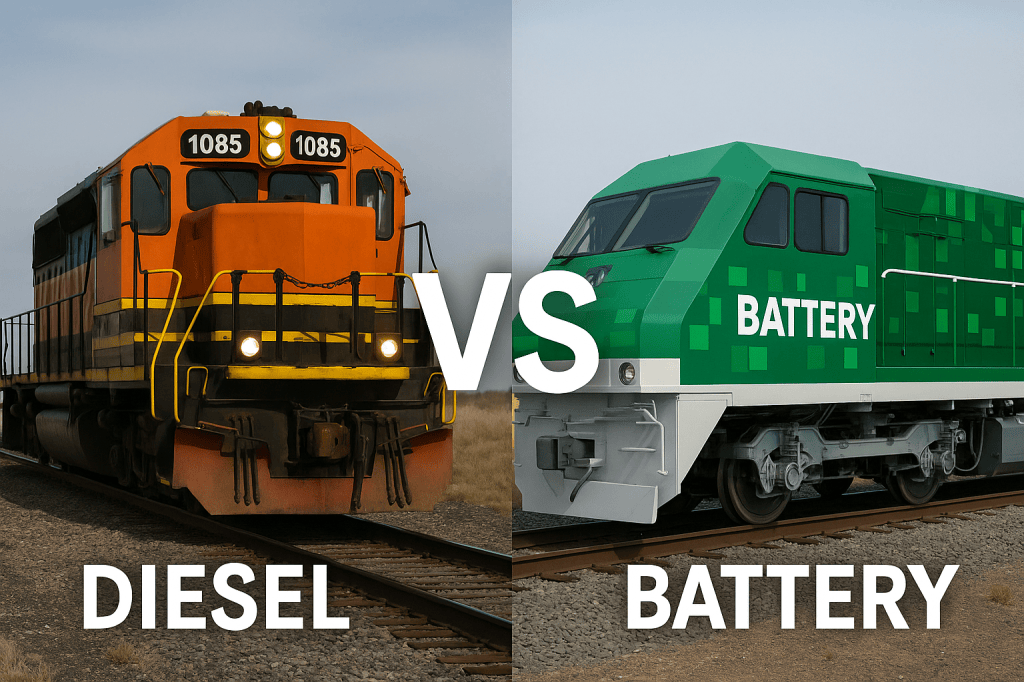
    Every day, thousands of diesel locomotives thunder across America, burning through their share of 4 billion gallons of fuel annually while hauling freight over nearly 140,000 miles of track. It’s a system that’s worked reliably for more than a century. But now, a two-year-old startup called Voltify has an audacious plan that could upend everything: replacing diesel fuel with rechargeable batteries.

    The $94 Billion Question

    The numbers behind America’s $80 billion railroad industry tell a compelling story. The six largest Class 1 railroad companies—including giants like Union Pacific and CSX—collectively spend more than $11 billion every year just on diesel fuel. That’s $11 billion that could theoretically be redirected if batteries could do the job.

    According to a 2021 study published in Nature Energy, switching to battery power could save rail freight companies $94 billion over 20 years while drastically cutting emissions. Meanwhile, the International Energy Agency warns that railroads need to slash emissions by about 5% annually through 2030 to meet global net-zero targets.

    With financial pressure mounting and climate goals looming, the question isn’t whether railroads will eventually move away from diesel—it’s how quickly they can do it without breaking what already works.

    Three Players, Three Different Bets

    The race to electrify freight rail is heating up, but each major player is taking a different approach:

    Wabtec developed the FLXdrive battery locomotive in 2019, focusing on hybrid systems that can cut diesel consumption by 30%. They’re already seeing orders from Australia, proving there’s real commercial interest.

    Siemens Mobility launched its Charger B+AC battery-electric train for New York’s Metro-North Railroad. These locomotives can run up to 100 miles on battery power alone and seamlessly switch between overhead electric lines and onboard storage.

    Voltify is betting on the most radical approach: retrofitting existing locomotives rather than replacing them entirely.

    Voltify’s Radical Retrofit Strategy

    Founded in 2023, Voltify wants to decarbonize freight rail in less than a decade without forcing railroads to scrap their existing fleets. Their solution centers on the VoltCar—massive battery packs on wheels that attach to current locomotives like additional freight cars.

    But here’s where it gets interesting: instead of requiring expensive overhead electrification across entire routes, Voltify plans to build 1,400 solar-powered microgrids at strategic points across the country. Think of it as a charging station network for trains, where locomotives can quickly top off their battery cars without scheduled stops.

    The system maintains diesel backup capability, so if a battery fails or a charging station goes down, trains can continue running on conventional fuel. According to their forecasting algorithm, this approach can predict power demands on every route, ensuring trains have energy when and where they need it.

    If successful, Voltify projects this model could generate $10 billion in annual revenue while fundamentally changing how freight moves across America.

    Why Railroad Executives Are Skeptical

    “Reliability and uptime are everything in freight rail,” explains one industry veteran who asked not to be named. When a locomotive breaks down, it can cost thousands of dollars per hour in delays, missed connections, and crew overtime.

    The concerns are practical and immediate:

    Charging infrastructure: Building 1,400 microgrids across the country represents a massive upfront investment. What happens in remote areas where solar power is less reliable?

    Winter performance: Battery capacity drops significantly in cold weather. How will that affect operations in places like North Dakota in January?

    Maintenance complexity: Current diesel mechanics understand engines that haven’t fundamentally changed in decades. Battery systems, high-voltage electronics, and microgrid operations require entirely different skill sets.

    Range anxiety: While Voltify’s diesel backup addresses some concerns, railroad operators want to know exactly how far these battery cars can go on a single charge, and how that compares to current diesel range.

    Starting Small, Thinking Big

    Voltify seems to understand these concerns. Rather than approaching major Class 1 railroads first, they’re planning demonstration projects with smaller regional operators this year, followed by a pilot with a major carrier in 2026.

    “We’re not asking anyone to bet the farm on unproven technology,” a Voltify representative explained. “We’re asking them to test it on routes where the stakes are manageable.”

    This approach makes strategic sense. Regional railroads often operate shorter routes with more predictable schedules—perfect conditions for proving battery technology works. Success there could provide the real-world data needed to convince larger operators.

    What This Means for the Workforce

    Even if batteries gain traction, this won’t spell the end of diesel careers overnight. Locomotives typically operate for 20-40 years, meaning any transition would unfold over decades.

    For diesel technicians and mechanics, the shift could actually create opportunities rather than eliminate them. Future rail jobs will likely require hybrid skills: traditional mechanical knowledge combined with high-voltage battery diagnostics, energy storage maintenance, and microgrid operations.

    “The fundamentals don’t change,” says Mike Rodriguez, a locomotive mechanic with 15 years of experience. “Trains still need wheels, brakes, and regular maintenance. We’ll just be adding electrical systems to our toolkit.”

    The Reliability Test

    So will America’s freight railroads actually abandon diesel for batteries? The economic incentives are massive, the climate pressure is real, and companies like Voltify are pushing innovative solutions.

    But diesel engines have set the gold standard for reliability for more than 100 years. They work in blizzards, heat waves, and everything in between. They refuel quickly at any depot. When they break, mechanics know how to fix them.

    The real test isn’t whether battery technology can work—it’s whether it can match diesel’s legendary reliability while delivering those promised savings.

    The Verdict Is Still Out

    The next few years will be crucial. Voltify’s demonstration projects in 2025 and their Class 1 pilot in 2026 will provide real-world data on everything from charging times to winter performance to maintenance costs.

    If the pilots succeed, we could see accelerated adoption across the industry. If they reveal unexpected problems, it might push the timeline back by years or even decades.

    Which factor do you think will ultimately decide this race: the $94 billion in potential savings, or the 100-year track record of diesel reliability? The answer may determine whether your grandchildren hear the rumble of diesel engines or the quiet hum of electric motors carrying freight across America.

    Getting ready for ASE certification? Read our ASE T2 Diesel Engines study guide, then take a free T2 practice test with instant explanations for every answer.

  • 5 Careers in the Diesel Industry (2026 Guide)

    5 Careers in the Diesel Industry (2026 Guide)

    Updated October 2026: We refreshed this guide with the latest pay and job outlook numbers from the U.S. Bureau of Labor Statistics.

    Over 70% of America’s freight moves by diesel-powered trucks, and the U.S. Bureau of Labor Statistics expects about 24,400 openings for diesel technicians every year through 2035. This gap represents unprecedented opportunity for those entering the field. From trucks that transport goods across the country to heavy equipment that builds roads to ships that move international cargo, diesel technology keeps industries running—and skilled professionals are more in demand than ever.

    The diesel industry isn’t just about traditional mechanical work anymore. Today’s professionals work with hybrid systems, advanced emissions technology, and sophisticated diagnostic software alongside traditional repair skills. With strong wages, steady career paths, and opportunities to specialize in emerging technologies, the diesel field offers diverse pathways for long-term career growth.

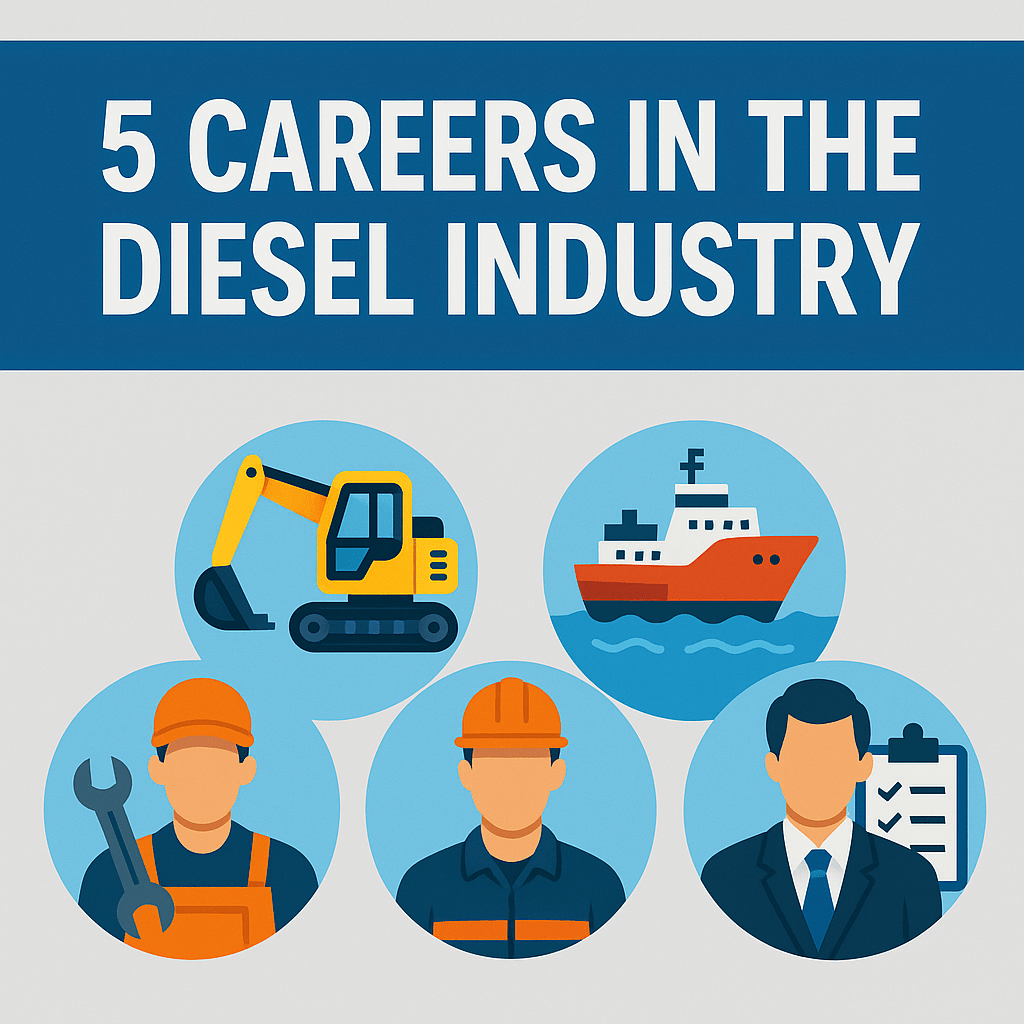
    Here are five rewarding careers in the diesel industry worth exploring:

    1. Diesel Technician/Mechanic

    Diesel technicians are the backbone of the industry, diagnosing, repairing, and maintaining diesel engines in trucks, buses, and heavy equipment. Modern technicians spend as much time working with laptops and diagnostic software as they do with wrenches, troubleshooting complex electronic systems and emissions controls.

    A typical day might include: Running diagnostic tests on a truck’s engine management system in the morning, replacing a turbocharger on a delivery van after lunch, and updating software on a fleet of buses before closing.

    Career progression: Entry-level tech → Lead technician → Shop supervisor → Service manager (typically 8-12 years)

    Requirements:

    • Diesel technology certificate or associate degree (12-24 months)
    • ASE certification preferred (start with our T2 Diesel Engines study guide)
    • Strong mechanical aptitude and problem-solving skills

    Why it’s a good career:

    • High demand nationwide with job security
    • Opportunities to specialize in engines, fuel systems, emissions, or fleet maintenance
    • Median pay was $61,770 per year in 2025 (BLS), with experienced techs earning $70,000+
    • Salaries range from $45,000 in rural areas to $75,000+ in major metropolitan markets

    2. Heavy Equipment Mechanic

    While similar to diesel techs, heavy equipment mechanics focus on machines used in construction, agriculture, and mining—bulldozers, excavators, cranes, and tractors. This role often involves field service work, traveling to job sites to keep critical projects moving when equipment breaks down.

    A typical day might include: Performing preventive maintenance on excavators at a construction site in the morning, then driving to a farm to repair a combine harvester’s hydraulic system.

    Requirements:

    • Technical training in heavy equipment or diesel technology
    • Valid driver’s license and willingness to travel
    • Physical stamina for outdoor work in various weather conditions

    Why it’s a good career:

    • Critical to construction, agriculture, and infrastructure projects
    • Field service work often includes travel premiums and overtime opportunities
    • Strong job security as infrastructure investment continues
    • Median salary $60,000–$70,000 per year, with union jobs often reaching $80,000+

    Considerations: Work involves exposure to weather, noise, and physically demanding conditions.

    3. Marine Diesel Technician

    Ships, ferries, and tugboats rely on massive diesel engines that require specialized knowledge. Marine diesel technicians maintain and repair these large-scale systems, working in shipyards, marinas, or traveling with vessels for at-sea repairs.

    Requirements:

    • Marine technology training or diesel program with marine focus
    • Coast Guard certifications for certain positions
    • Ability to work in confined spaces and comfort around water

    Why it’s a good career:

    • Niche specialty with limited competition
    • Opportunities for international work and travel
    • Growing offshore wind industry creating new opportunities
    • Pay ranges from $65,000–$100,000+, especially with specialized certifications
    • Highest salaries typically found near major ports (Seattle, Long Beach, Houston, Norfolk)

    4. Power Generation Mechanic

    Diesel engines don’t just move vehicles—they generate electricity that keeps hospitals, data centers, and emergency services running when the grid fails. Power generation mechanics service and repair diesel-powered generators, from portable units on construction sites to massive backup systems for critical facilities.

    A typical day might include: Conducting monthly maintenance on hospital backup generators in the morning, then responding to an emergency call when a data center’s power system fails.

    Requirements:

    • Electrical knowledge in addition to diesel expertise
    • Emergency response mindset and availability for on-call work
    • Certification in electrical systems preferred

    Why it’s a good career:

    • Essential services that can’t be outsourced or delayed
    • Growing demand as data centers and renewable energy storage expand
    • Opportunities to specialize in portable generators, stationary systems, or renewable energy backup
    • Salaries typically range from $60,000–$80,000+, with strong overtime and emergency call-out premiums

    5. Fleet Maintenance Manager

    Fleet managers oversee maintenance operations for trucking companies, transit agencies, or construction fleets rather than turning wrenches daily. They schedule service, manage parts inventories, track maintenance costs, ensure regulatory compliance, and lead teams of technicians while using fleet management software to optimize operations.

    Career progression: This role typically requires 8-15 years of hands-on experience before moving into management.

    Requirements:

    • Extensive technical background in diesel systems
    • Leadership and communication skills
    • Knowledge of fleet management software and regulatory requirements
    • Business and cost management understanding

    Why it’s a good career:

    • Combines technical expertise with leadership and business skills
    • Growing demand as supply chains expand and fleet technology becomes more complex
    • Opportunity to impact company operations and profitability
    • Salaries often range from $70,000–$90,000+, with larger fleets offering $100,000+

    The Evolving Industry

    Today’s diesel professionals work with increasingly sophisticated technology. Modern engines integrate hybrid systems, advanced emissions controls, and telematics that monitor performance in real-time. This evolution means ongoing learning is essential, but it also creates opportunities for specialization and higher wages for those who stay current with emerging technologies.

    The push toward cleaner emissions has created entirely new specializations in diesel exhaust fluid systems, particulate filters, and selective catalytic reduction—areas where skilled technicians command premium wages.

    Getting Started

    Immediate next steps:

    1. Research local programs: Visit the ASE Education Foundation to find accredited diesel technology programs in your area
    2. Explore apprenticeships: Many dealerships and fleets offer paid apprenticeships that combine work and training
    3. Visit facilities: Contact local truck dealerships, construction companies, or ports to arrange informational interviews
    4. Consider specializations: Research which areas (marine, power generation, emissions) have the highest demand in your region

    Timeline expectations: Most diesel technology programs can be completed in 12-24 months, leading to entry-level positions with strong advancement potential.

    Final Thoughts

    The diesel industry offers a unique combination of job security, competitive wages, and diverse career paths that can’t be outsourced. Whether you prefer hands-on problem-solving, specialized technical work, or eventually moving into leadership roles, diesel technology provides a foundation for long-term career growth.

    With the current shortage of skilled professionals and the ongoing evolution of diesel technology, now is an ideal time to enter this vital industry that literally keeps America moving.

    Getting ready for ASE certification? Read our ASE T2 Diesel Engines study guide, then take a free T2 practice test with instant explanations for every answer.

  • The 10 Best Trucks for Long Haul Trucking (2026 Update)

    The 10 Best Trucks for Long Haul Trucking (2026 Update)

    Updated October 2026: We refreshed this list for current models. Peterbilt’s 389 is now the 589, Western Star’s 5700XE is now the 57X, and Volvo rolled out an all-new VNL. If you’re buying new, keep an eye on EPA’s 2027 low-NOx rule, which takes effect January 1, 2027 and is expected to raise new-truck prices.

    If you are looking to get into the trucking game here are 10 trucks you should consider purchasing to get started!

    Long haul trucking demands more than just a reliable vehicle; it requires a truck that can handle the rigorous demands of long distances, provide comfort over extended periods, and offer the technology and fuel efficiency to keep drivers and fleets running smoothly. Below are ten of the best trucks designed for the long haul, known for their performance, durability, and driver-friendly features.

    1. Freightliner Cascadia

    The Freightliner Cascadia is a staple in the long-haul industry. Known for its fuel efficiency and advanced aerodynamics, the Cascadia is designed to reduce drag and save fuel. It comes with Detroit Assurance, a suite of safety systems that includes collision mitigation, lane departure warnings, and adaptive cruise control. The Cascadia’s spacious cab and sleeper options provide comfort during long trips, making it a top choice for drivers.

    2. Volvo VNL

    Volvo rebuilt its flagship VNL for the 2024 model year, and Volvo says it’s about 90% new. The redesigned cab is more aerodynamic, the Volvo D13 is still the go-to engine, and Volvo Active Driver Assist adds collision warning and emergency braking. Sleeper options remain some of the roomiest in the industry.

    3. Kenworth T680

    The Kenworth T680 is a truck that prioritizes both performance and driver comfort. Its PACCAR MX-13 engine delivers impressive fuel efficiency, while its aerodynamic design reduces wind resistance. Inside, the T680 offers a driver-centric design with a fully adjustable steering column, ergonomic seats, and a quiet cab. Kenworth’s Predictive Cruise Control uses GPS to anticipate terrain changes, optimizing fuel use on the road.

    4. Peterbilt 579

    Peterbilt’s 579 model is designed with the driver in mind, offering a combination of fuel efficiency, safety, and comfort. The 579 features the PACCAR MX-13 engine and an advanced aerodynamic design that reduces fuel consumption. Inside, the spacious cab provides plenty of storage, and the SmartNav system integrates navigation, communications, and entertainment. Safety features like the Bendix Wingman Fusion system offer collision mitigation and lane departure warnings.

    5. International LT Series

    The International LT Series is built for long-haul efficiency, with a focus on fuel economy and driver comfort. Powered by the A26 engine, it’s lighter and more efficient, providing up to a 9% improvement in fuel economy over previous models. The LT Series also offers an ergonomic cab design with features like a telescoping steering column and a well-insulated sleeper. The truck’s advanced safety systems include lane departure warnings and automatic emergency braking.

    6. Mack Anthem

    The Mack Anthem stands out with its bold design and reputation for durability. It’s powered by the MP8 engine, known for its reliability and fuel efficiency. The Anthem is also designed with aerodynamics in mind, which helps improve fuel economy. The interior features a modern, driver-focused design with a flat-bottom steering wheel, digital dash, and a spacious sleeper. Mack’s Co-Pilot display provides real-time monitoring of vehicle performance.

    7. Western Star 57X

    Western Star replaced the 5700XE with the 57X, its on-highway sleeper truck. It keeps Western Star’s classic look with a more aerodynamic design, Detroit DD15 power and modern safety systems like adaptive cruise control and collision mitigation.

    8. Freightliner Cascadia with Cummins X15N (Natural Gas)

    If you’re considering natural gas, the Cascadia is now available with the Cummins X15N, a 15-liter natural gas engine that runs on compressed or renewable natural gas. It gives fleets a lower-emission option with the power long-haul work needs. Fueling stations are still limited, so plan routes around CNG and RNG availability.

    9. Volvo VNR 640

    Though often associated with regional hauls, the Volvo VNR 640 is a strong contender for long-haul routes due to its versatility and comfort. It features the D11 engine, which provides a good balance between power and fuel efficiency. The VNR 640’s cab is ergonomically designed with a focus on driver comfort, featuring a reclining bunk, ample storage, and a quiet interior. Advanced safety features include Volvo Active Driver Assist and electronic stability control.

    10. Peterbilt 589

    Peterbilt retired the classic 389 and replaced it with the Model 589. It keeps the long-hood look owner-operators love, with a wider cab, an updated interior and modern electrical and safety systems, and it’s still a favorite for owner-operators who want a truck that can handle tough long-haul work.

    Conclusion

    Choosing the right truck for long-haul trucking is crucial for both performance and comfort. Whether you prioritize fuel efficiency, advanced safety features, or driver comfort, there’s a truck on this list that meets your needs. Investing in a high-quality truck not only ensures a smoother ride but also contributes to better fuel economy and reduced downtime, making these models the best in the business for long-distance hauls.

    Getting ready for ASE certification? Read our ASE T2 Diesel Engines study guide, then take a free T2 practice test with instant explanations for every answer.

  • Introducing the MAN V12X: The Next Generation of Yacht Engines

    Introducing the MAN V12X: The Next Generation of Yacht Engines

    Updated October 2026: The specs below come from MAN Engines’ launch announcement. Check MAN’s V12X page for current ratings.

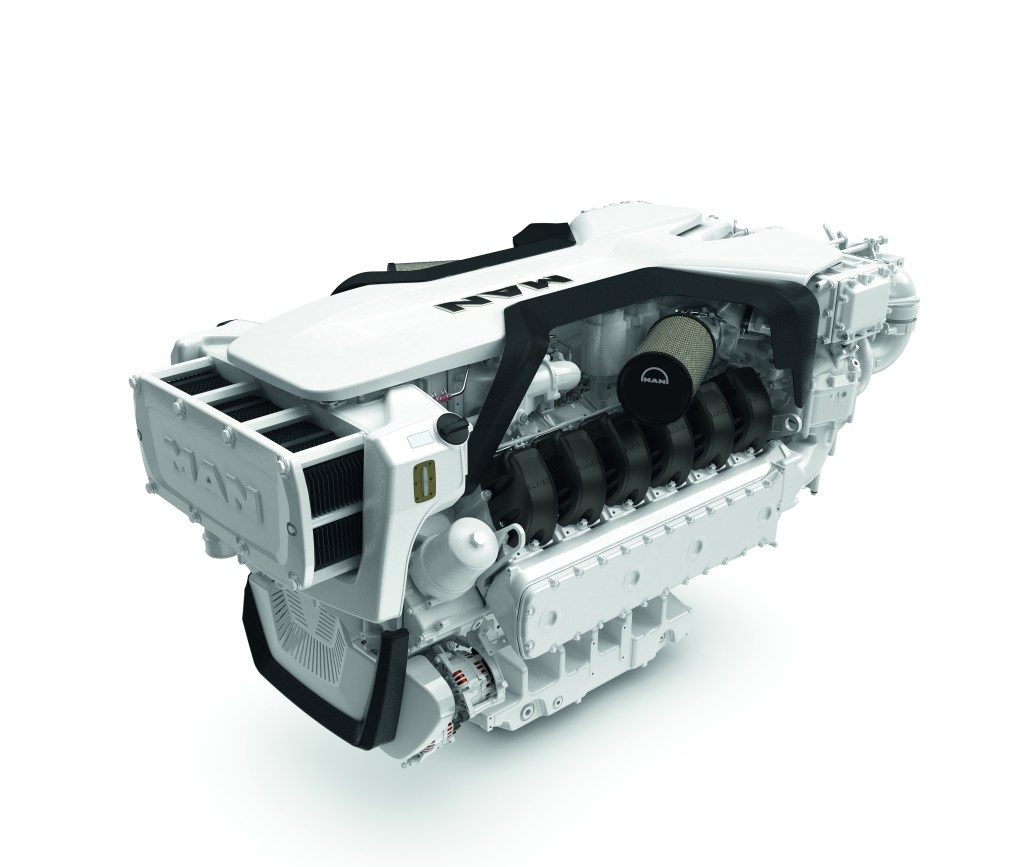
    MAN 30L Diesel Engine

    MAN continues to innovate

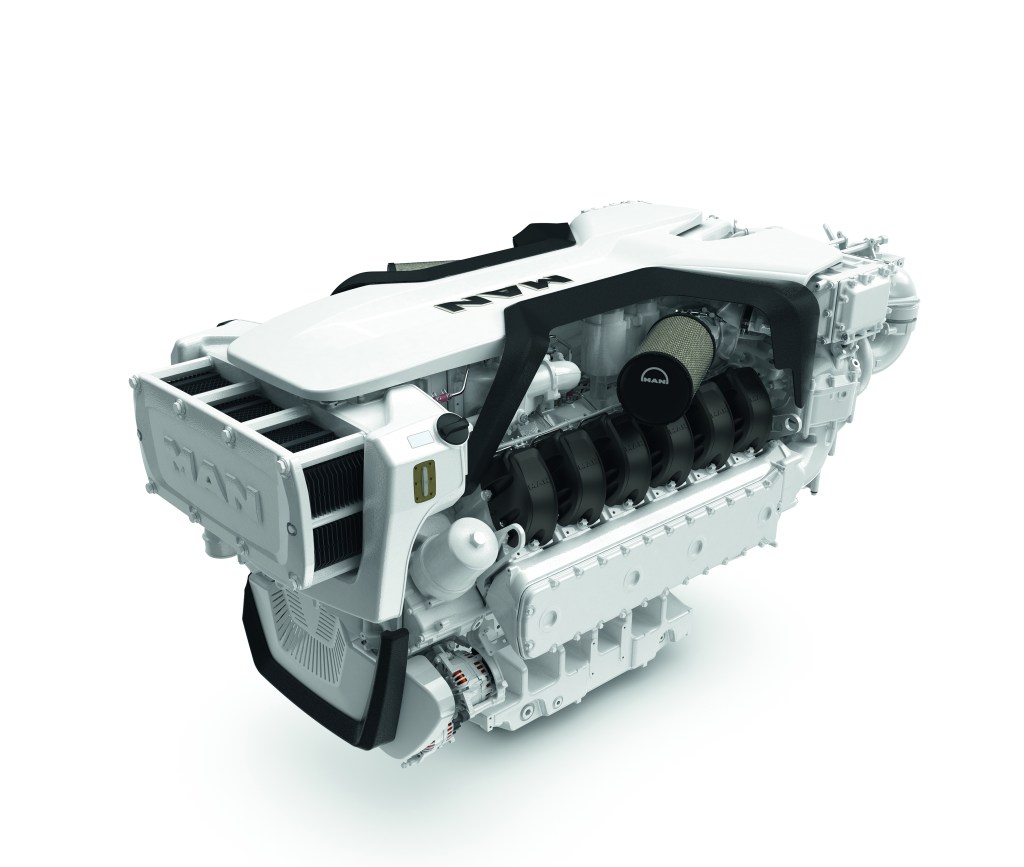
    MAN Engines is revolutionizing the world of yachting with the introduction of the MAN V12X engine series. This state-of-the-art V12 engine, specifically designed for yacht applications, represents a significant leap forward in marine power, delivering an exceptional 2200 hp (1618 kW) from a 30-litre displacement engine. For the first time, MAN Engines is offering this level of output, providing yacht builders with unprecedented opportunities to power larger yachts and superyachts.

    “We are opening up new opportunities for shipyards with this next generation of engines. The MAN V12X can not only top existing applications but also power new larger yachts and superyachts,” says Reiner Roessner, Head of Sales at MAN Engines.

    Unparalleled Performance and Engineering

    The MAN V12X-2200 achieves its impressive output at 2300 rpm, with a bore of 138 mm and a stroke of 165 mm. This engine surpasses the capabilities of its predecessor, the MAN V12-2000, by increasing displacement and torque, setting a new benchmark in marine engineering.

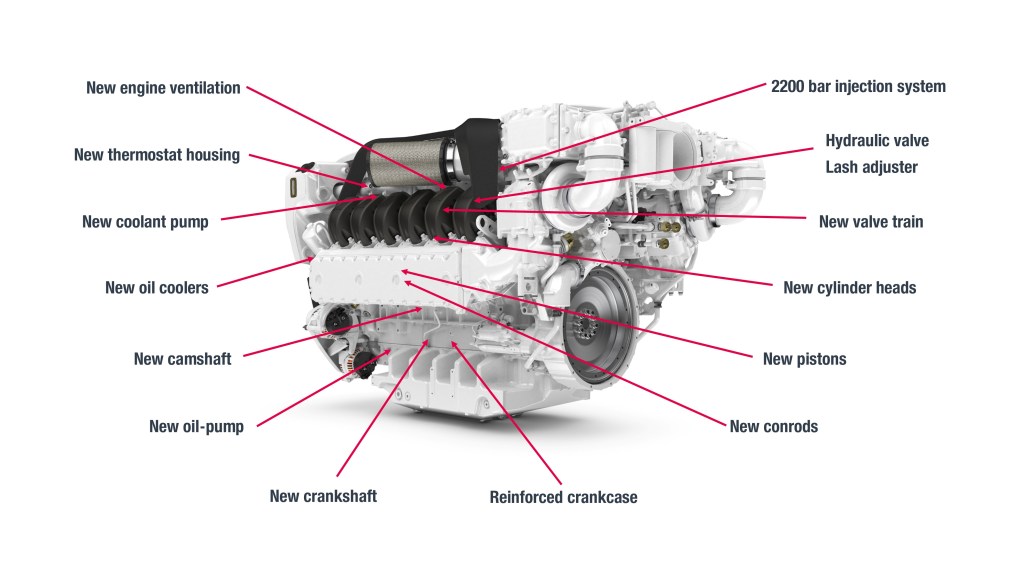
    This new engine is based on an entirely new platform, drawing on the successes of the existing V12 series, which continues to deliver reliable performance for yachts requiring up to 2000 hp. To ensure the V12X meets the highest standards of durability and reliability, MAN’s engineers have implemented several key enhancements, including increased wall thicknesses in the crankcase, optimized bolt connections, and a new crankshaft with larger bearing diameters. These advancements are the result of extensive testing and real-world maritime trials.

    MAN 30L Diesel Engine

    Innovative Features for Enhanced Durability

    The MAN V12X engine series introduces several innovations designed to enhance both performance and durability. The engine is built to handle a full-load share of up to 20%, thanks to improvements such as a new coolant pump, optimized thermostat housing, and an upgraded oil supply system.

    In a first for MAN marine engines, the V12X includes hydraulic valve lash adjustment (HVA) as standard, which eliminates the need for regular valve lash checks and adjustments. The engine also features a new Common Rail injection system with an impressive 2200 bar injection pressure, which ensures low fuel consumption and meets stringent emissions standards.

    Commitment to Sustainability

    The MAN V12X engine series is not just about power—it also reflects MAN’s commitment to sustainability. The engine is designed to integrate with MAN’s hybrid system, the “MAN Smart HYBRID Experience,” offering a pathway to more environmentally friendly marine propulsion. Additionally, the engine’s modular exhaust gas aftertreatment system allows for flexible installation while minimizing maintenance, all while meeting the latest emissions regulations.

    Compact and Powerful

    Despite its high performance, the MAN V12X remains compact and lightweight, making it suitable for both new yacht builds and engine replacements. With its optimized design, this engine offers a superior power-to-weight ratio while requiring minimal space.

    The MAN V12X engine is available in the V12X-2200 model, providing a powerful solution for yachts requiring between 730 and 2200 hp. This launch marks a new era in yachting, where cutting-edge technology meets unparalleled performance, offering yacht owners and builders the perfect balance of power, innovation, and sustainability.

    Getting ready for ASE certification? Read our ASE T2 Diesel Engines study guide, then take a free T2 practice test with instant explanations for every answer.

  • Hyzon Motors: What Happened to the Hydrogen Truck Maker

    Hyzon Motors: What Happened to the Hydrogen Truck Maker

    Updated October 2026: Hyzon Motors is no longer in business. In late March 2025, shareholders approved selling off the company’s assets and dissolving it, and its remaining assets went to liquidation. We’ve kept the original 2023 article below for the record. The lesson for technicians: new powertrains come and go, but diesel and natural gas are still the backbone of heavy-duty work, so those skills are still where the jobs are.

    Introduction

    There are few names in the zero-emission vehicle industry that have been creating as much buzz as Hyzon Motors. In the race towards a cleaner, greener future, this trailblazing company is at the forefront, harnessing the power of hydrogen fuel cells to revolutionize the transportation sector. With its pioneering hydrogen engines, Hyzon Motors is setting a new standard for clean energy, proving that sustainability and performance can indeed go hand in hand.

    The Hyzon Motors Journey

    Founded in 2003 as part of Singapore’s Horizon Fuel Cell Technologies, Hyzon Motors is a global leader in hydrogen energy. After two decades of research and development in fuel cell technology, the company was spun off in 2020 to focus on the production of zero-emission commercial vehicles. Headquartered in Honeoye Falls, New York, Hyzon Motors is geared towards the development of hydrogen fuel cell-powered heavy vehicles, a market niche with significant potential for reducing carbon emissions.

    Hydrogen Engines: A Greener Future

    Traditional combustion engines operate by burning fossil fuels, releasing harmful carbon dioxide into the atmosphere. Hyzon’s hydrogen engines, however, take a different approach. They utilize hydrogen fuel cells, which produce electricity through a chemical reaction between hydrogen and oxygen, to power the vehicle. This process results in water as the only byproduct, marking a significant departure from the pollutant emissions characteristic of traditional engines.

    Moreover, the hydrogen used as fuel can be produced from a variety of renewable energy sources, making the entire life-cycle of a hydrogen-powered vehicle potentially carbon-neutral. This is the central appeal of Hyzon Motors’ technology: a complete, sustainable transportation solution that doesn’t compromise on power or range.

    Hyzon Motors’ Offerings

    Hyzon’s innovative lineup includes an array of heavy-duty vehicles, from trucks and buses to vans, powered by hydrogen fuel cell technology. With a focus on commercial applications, these vehicles are designed to offer similar, if not superior, performance to their diesel counterparts, but without the accompanying pollution.

    These vehicles also address one of the major drawbacks of electric vehicles: long charging times. Hydrogen-powered vehicles can be refueled in a matter of minutes, comparable to conventional refueling times for gasoline or diesel vehicles. This makes them an ideal choice for commercial operations, where minimizing downtime is a priority.

    Hyzon’s technology is not just limited to the engines. They have developed a comprehensive suite of technologies for the entire hydrogen ecosystem, including refueling infrastructure and hydrogen production methods. By considering the entire supply chain, Hyzon is working towards a future where hydrogen is a practical and accessible fuel source for all.

    Conclusion

    The future of transportation lies in zero-emission vehicles, and Hyzon Motors is at the vanguard of this shift. With their state-of-the-art hydrogen engines, they are transforming the way we think about commercial transportation, offering a truly green alternative that doesn’t compromise on performance or practicality.

    As we look towards a future where sustainability is not just an option but a necessity, the work of companies like Hyzon Motors becomes ever more critical. Their hydrogen engines are a testament to the power of innovation and a beacon of hope for a cleaner, greener future.

    Related: Cat C13D, Caterpillar’s new 13-liter off-highway diesel

    Getting ready for ASE certification? Read our ASE T2 Diesel Engines study guide, then take a free T2 practice test with instant explanations for every answer.