Updated October 2026: Since this post ran, EPA has kept moving on DEF. The August 2025 guidance set the three-stage derate schedule below. In March 2026, EPA dropped the requirement for DEF (urea) quality sensors, one of the most failure-prone parts of SCR systems, and said manufacturers can push software updates to existing trucks to remove them without it counting as tampering. In July 2026, EPA proposed eliminating DEF derates entirely and replacing them with audible warnings by 2029. That proposal is not final yet, so watch for the final rule.
Farmers and truckers across America can finally breathe easier thanks to new guidance from the EPA that addresses a longstanding problem with diesel exhaust fluid (DEF) systems.
The Problem That’s Been Plaguing Operators
Since the early 2010s, diesel vehicles and equipment have been required to use Selective Catalytic Reduction (SCR) technology that runs on DEF to reduce nitrogen oxide emissions. While this technology has been tremendously successful—reducing nitrogen oxide (NOx) emissions by up to 99%—it came with a major operational headache.
When DEF sensors failed or DEF ran low, operators faced a harsh reality: they had just four hours before their equipment would shut down completely. Picture a farmer mid-harvest in an Iowa field, losing precious daylight and yield because their tractor suddenly stopped working. Or a trucker whose 18-wheeler slowed to a crawl on the highway with no warning.
The Solution: Practical Relief That Works
The Trump administration’s EPA, working with the Small Business Administration, has issued new guidance that dramatically extends the time operators have to address DEF issues:
For Heavy-Duty Trucks:
Stage 1: 15% torque reduction after 650 miles or 10 hours
Stage 2: 30% torque reduction after 4,200 miles or 80 hours
Stage 3: 25 mph speed limit after 8,400 miles or 160 hours
New trucks (model year 2027 and later) must be designed to avoid sudden, severe derates, and existing trucks get the new schedule through software updates
For Farm Equipment:
No impact for the first 36 hours
Only slight torque reduction after that initial period
The Bottom Line Impact
This isn’t just about convenience—it’s about economic survival. The revised guidance will save family farmers an estimated $727 million annually by reducing:
Emergency towing costs
Repair expenses
Equipment rental fees
DEF delivery charges
Inventory carrying costs
For Iowa alone, with its 87,000 farms generating over $40 billion in crop and livestock value, this represents a significant boost to agricultural productivity.
Environmental Protection Remains Intact
Importantly, these changes don’t compromise environmental goals. The SCR technology continues to eliminate 99% of harmful emissions—the new guidance simply provides operators with reasonable time to address system faults without catastrophic shutdowns.
A Win for Real-World Operations
This policy change recognizes that farmers and truckers need solutions that work in the real world, not just on paper. By giving operators significantly more time to address DEF issues, the EPA has found the sweet spot between environmental protection and operational practicality.
The result? America’s food supply chain stays moving, rural economies stay strong, and the air stays clean. That’s what smart policy looks like.
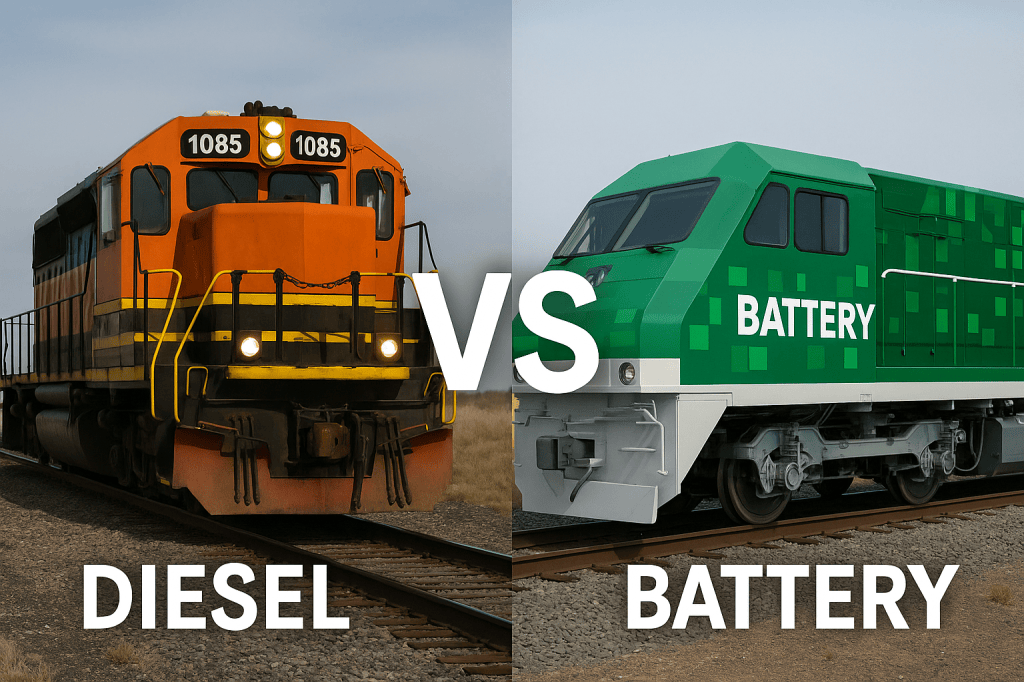
Updated October 2026: Voltify has since raised a $30 million seed round co-led by venture firm Aleph and mining company Fortescue, and it is building its VoltCars around sodium-ion batteries. Meanwhile, Union Pacific took delivery of its first two Wabtec FLXdrive battery-electric locomotives in September 2026 for switching and local service around Los Angeles, with two more on the way. Each carries about 2.7 megawatt-hours of battery storage. The diesel-versus-battery question is now being tested on real track.
Every day, thousands of diesel locomotives thunder across America, burning through their share of 4 billion gallons of fuel annually while hauling freight over nearly 140,000 miles of track. It’s a system that’s worked reliably for more than a century. But now, a two-year-old startup called Voltify has an audacious plan that could upend everything: replacing diesel fuel with rechargeable batteries.
The $94 Billion Question
The numbers behind America’s $80 billion railroad industry tell a compelling story. The six largest Class 1 railroad companies—including giants like Union Pacific and CSX—collectively spend more than $11 billion every year just on diesel fuel. That’s $11 billion that could theoretically be redirected if batteries could do the job.
According to a 2021 study published in Nature Energy, switching to battery power could save rail freight companies $94 billion over 20 years while drastically cutting emissions. Meanwhile, the International Energy Agency warns that railroads need to slash emissions by about 5% annually through 2030 to meet global net-zero targets.
With financial pressure mounting and climate goals looming, the question isn’t whether railroads will eventually move away from diesel—it’s how quickly they can do it without breaking what already works.
Three Players, Three Different Bets
The race to electrify freight rail is heating up, but each major player is taking a different approach:
Wabtec developed the FLXdrive battery locomotive in 2019, focusing on hybrid systems that can cut diesel consumption by 30%. They’re already seeing orders from Australia, proving there’s real commercial interest.
Siemens Mobility launched its Charger B+AC battery-electric train for New York’s Metro-North Railroad. These locomotives can run up to 100 miles on battery power alone and seamlessly switch between overhead electric lines and onboard storage.
Voltify is betting on the most radical approach: retrofitting existing locomotives rather than replacing them entirely.
Voltify’s Radical Retrofit Strategy
Founded in 2023, Voltify wants to decarbonize freight rail in less than a decade without forcing railroads to scrap their existing fleets. Their solution centers on the VoltCar—massive battery packs on wheels that attach to current locomotives like additional freight cars.
But here’s where it gets interesting: instead of requiring expensive overhead electrification across entire routes, Voltify plans to build 1,400 solar-powered microgrids at strategic points across the country. Think of it as a charging station network for trains, where locomotives can quickly top off their battery cars without scheduled stops.
The system maintains diesel backup capability, so if a battery fails or a charging station goes down, trains can continue running on conventional fuel. According to their forecasting algorithm, this approach can predict power demands on every route, ensuring trains have energy when and where they need it.
If successful, Voltify projects this model could generate $10 billion in annual revenue while fundamentally changing how freight moves across America.
Why Railroad Executives Are Skeptical
“Reliability and uptime are everything in freight rail,” explains one industry veteran who asked not to be named. When a locomotive breaks down, it can cost thousands of dollars per hour in delays, missed connections, and crew overtime.
The concerns are practical and immediate:
Charging infrastructure: Building 1,400 microgrids across the country represents a massive upfront investment. What happens in remote areas where solar power is less reliable?
Winter performance: Battery capacity drops significantly in cold weather. How will that affect operations in places like North Dakota in January?
Maintenance complexity: Current diesel mechanics understand engines that haven’t fundamentally changed in decades. Battery systems, high-voltage electronics, and microgrid operations require entirely different skill sets.
Range anxiety: While Voltify’s diesel backup addresses some concerns, railroad operators want to know exactly how far these battery cars can go on a single charge, and how that compares to current diesel range.
Starting Small, Thinking Big
Voltify seems to understand these concerns. Rather than approaching major Class 1 railroads first, they’re planning demonstration projects with smaller regional operators this year, followed by a pilot with a major carrier in 2026.
“We’re not asking anyone to bet the farm on unproven technology,” a Voltify representative explained. “We’re asking them to test it on routes where the stakes are manageable.”
This approach makes strategic sense. Regional railroads often operate shorter routes with more predictable schedules—perfect conditions for proving battery technology works. Success there could provide the real-world data needed to convince larger operators.
What This Means for the Workforce
Even if batteries gain traction, this won’t spell the end of diesel careers overnight. Locomotives typically operate for 20-40 years, meaning any transition would unfold over decades.
For diesel technicians and mechanics, the shift could actually create opportunities rather than eliminate them. Future rail jobs will likely require hybrid skills: traditional mechanical knowledge combined with high-voltage battery diagnostics, energy storage maintenance, and microgrid operations.
“The fundamentals don’t change,” says Mike Rodriguez, a locomotive mechanic with 15 years of experience. “Trains still need wheels, brakes, and regular maintenance. We’ll just be adding electrical systems to our toolkit.”
The Reliability Test
So will America’s freight railroads actually abandon diesel for batteries? The economic incentives are massive, the climate pressure is real, and companies like Voltify are pushing innovative solutions.
But diesel engines have set the gold standard for reliability for more than 100 years. They work in blizzards, heat waves, and everything in between. They refuel quickly at any depot. When they break, mechanics know how to fix them.
The real test isn’t whether battery technology can work—it’s whether it can match diesel’s legendary reliability while delivering those promised savings.
The Verdict Is Still Out
The next few years will be crucial. Voltify’s demonstration projects in 2025 and their Class 1 pilot in 2026 will provide real-world data on everything from charging times to winter performance to maintenance costs.
If the pilots succeed, we could see accelerated adoption across the industry. If they reveal unexpected problems, it might push the timeline back by years or even decades.
Which factor do you think will ultimately decide this race: the $94 billion in potential savings, or the 100-year track record of diesel reliability? The answer may determine whether your grandchildren hear the rumble of diesel engines or the quiet hum of electric motors carrying freight across America.
Updated October 2026: We refreshed this list for current models. Peterbilt’s 389 is now the 589, Western Star’s 5700XE is now the 57X, and Volvo rolled out an all-new VNL. If you’re buying new, keep an eye on EPA’s 2027 low-NOx rule, which takes effect January 1, 2027 and is expected to raise new-truck prices.
If you are looking to get into the trucking game here are 10 trucks you should consider purchasing to get started!
Long haul trucking demands more than just a reliable vehicle; it requires a truck that can handle the rigorous demands of long distances, provide comfort over extended periods, and offer the technology and fuel efficiency to keep drivers and fleets running smoothly. Below are ten of the best trucks designed for the long haul, known for their performance, durability, and driver-friendly features.
1. Freightliner Cascadia
The Freightliner Cascadia is a staple in the long-haul industry. Known for its fuel efficiency and advanced aerodynamics, the Cascadia is designed to reduce drag and save fuel. It comes with Detroit Assurance, a suite of safety systems that includes collision mitigation, lane departure warnings, and adaptive cruise control. The Cascadia’s spacious cab and sleeper options provide comfort during long trips, making it a top choice for drivers.
2. Volvo VNL
Volvo rebuilt its flagship VNL for the 2024 model year, and Volvo says it’s about 90% new. The redesigned cab is more aerodynamic, the Volvo D13 is still the go-to engine, and Volvo Active Driver Assist adds collision warning and emergency braking. Sleeper options remain some of the roomiest in the industry.
3. Kenworth T680
The Kenworth T680 is a truck that prioritizes both performance and driver comfort. Its PACCAR MX-13 engine delivers impressive fuel efficiency, while its aerodynamic design reduces wind resistance. Inside, the T680 offers a driver-centric design with a fully adjustable steering column, ergonomic seats, and a quiet cab. Kenworth’s Predictive Cruise Control uses GPS to anticipate terrain changes, optimizing fuel use on the road.
4. Peterbilt 579
Peterbilt’s 579 model is designed with the driver in mind, offering a combination of fuel efficiency, safety, and comfort. The 579 features the PACCAR MX-13 engine and an advanced aerodynamic design that reduces fuel consumption. Inside, the spacious cab provides plenty of storage, and the SmartNav system integrates navigation, communications, and entertainment. Safety features like the Bendix Wingman Fusion system offer collision mitigation and lane departure warnings.
5. International LT Series
The International LT Series is built for long-haul efficiency, with a focus on fuel economy and driver comfort. Powered by the A26 engine, it’s lighter and more efficient, providing up to a 9% improvement in fuel economy over previous models. The LT Series also offers an ergonomic cab design with features like a telescoping steering column and a well-insulated sleeper. The truck’s advanced safety systems include lane departure warnings and automatic emergency braking.
6. Mack Anthem
The Mack Anthem stands out with its bold design and reputation for durability. It’s powered by the MP8 engine, known for its reliability and fuel efficiency. The Anthem is also designed with aerodynamics in mind, which helps improve fuel economy. The interior features a modern, driver-focused design with a flat-bottom steering wheel, digital dash, and a spacious sleeper. Mack’s Co-Pilot display provides real-time monitoring of vehicle performance.
7. Western Star 57X
Western Star replaced the 5700XE with the 57X, its on-highway sleeper truck. It keeps Western Star’s classic look with a more aerodynamic design, Detroit DD15 power and modern safety systems like adaptive cruise control and collision mitigation.
8. Freightliner Cascadia with Cummins X15N (Natural Gas)
If you’re considering natural gas, the Cascadia is now available with the Cummins X15N, a 15-liter natural gas engine that runs on compressed or renewable natural gas. It gives fleets a lower-emission option with the power long-haul work needs. Fueling stations are still limited, so plan routes around CNG and RNG availability.
9. Volvo VNR 640
Though often associated with regional hauls, the Volvo VNR 640 is a strong contender for long-haul routes due to its versatility and comfort. It features the D11 engine, which provides a good balance between power and fuel efficiency. The VNR 640’s cab is ergonomically designed with a focus on driver comfort, featuring a reclining bunk, ample storage, and a quiet interior. Advanced safety features include Volvo Active Driver Assist and electronic stability control.
10. Peterbilt 589
Peterbilt retired the classic 389 and replaced it with the Model 589. It keeps the long-hood look owner-operators love, with a wider cab, an updated interior and modern electrical and safety systems, and it’s still a favorite for owner-operators who want a truck that can handle tough long-haul work.
Conclusion
Choosing the right truck for long-haul trucking is crucial for both performance and comfort. Whether you prioritize fuel efficiency, advanced safety features, or driver comfort, there’s a truck on this list that meets your needs. Investing in a high-quality truck not only ensures a smoother ride but also contributes to better fuel economy and reduced downtime, making these models the best in the business for long-distance hauls.
Updated October 2026: The specs below come from MAN Engines’ launch announcement. Check MAN’s V12X page for current ratings.
MAN continues to innovate
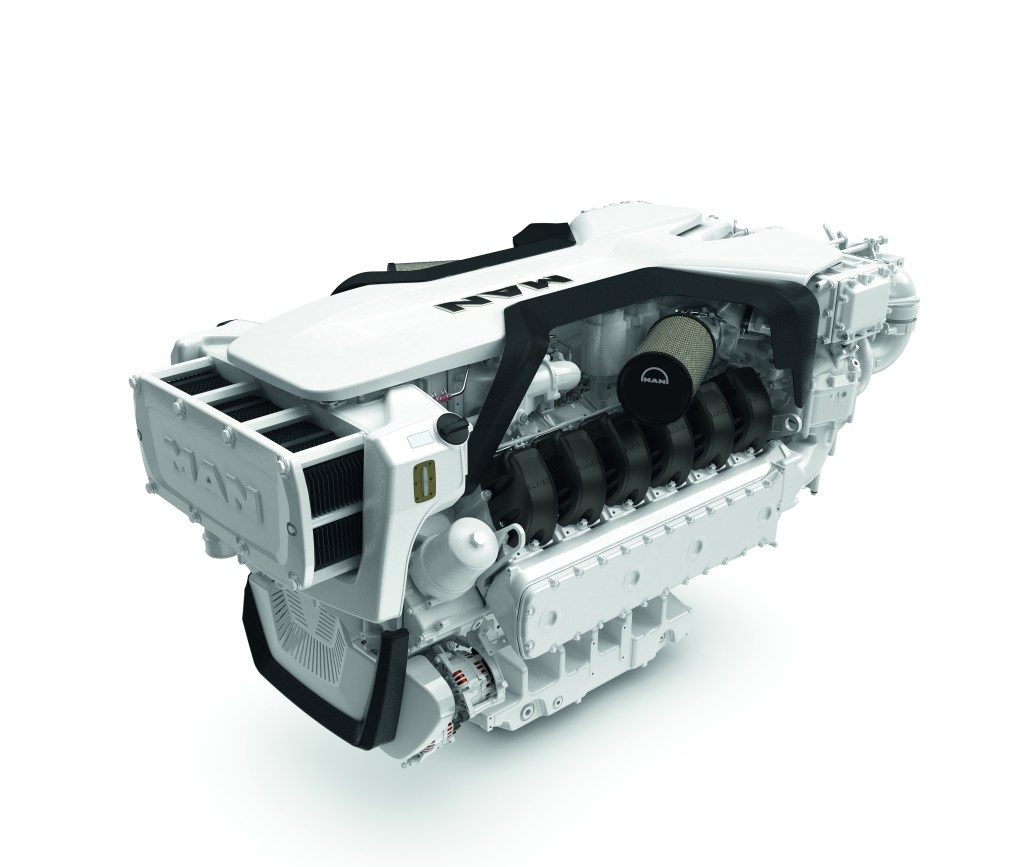
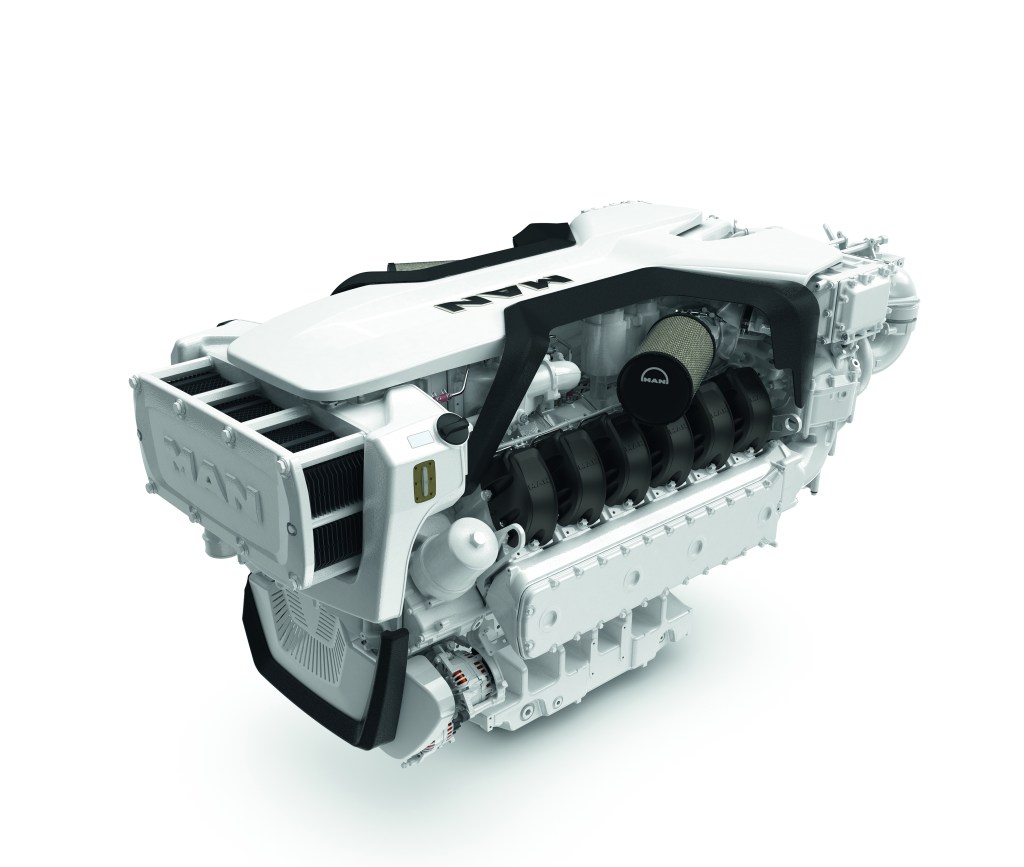
MAN Engines is revolutionizing the world of yachting with the introduction of the MAN V12X engine series. This state-of-the-art V12 engine, specifically designed for yacht applications, represents a significant leap forward in marine power, delivering an exceptional 2200 hp (1618 kW) from a 30-litre displacement engine. For the first time, MAN Engines is offering this level of output, providing yacht builders with unprecedented opportunities to power larger yachts and superyachts.
“We are opening up new opportunities for shipyards with this next generation of engines. The MAN V12X can not only top existing applications but also power new larger yachts and superyachts,” says Reiner Roessner, Head of Sales at MAN Engines.
Unparalleled Performance and Engineering
The MAN V12X-2200 achieves its impressive output at 2300 rpm, with a bore of 138 mm and a stroke of 165 mm. This engine surpasses the capabilities of its predecessor, the MAN V12-2000, by increasing displacement and torque, setting a new benchmark in marine engineering.
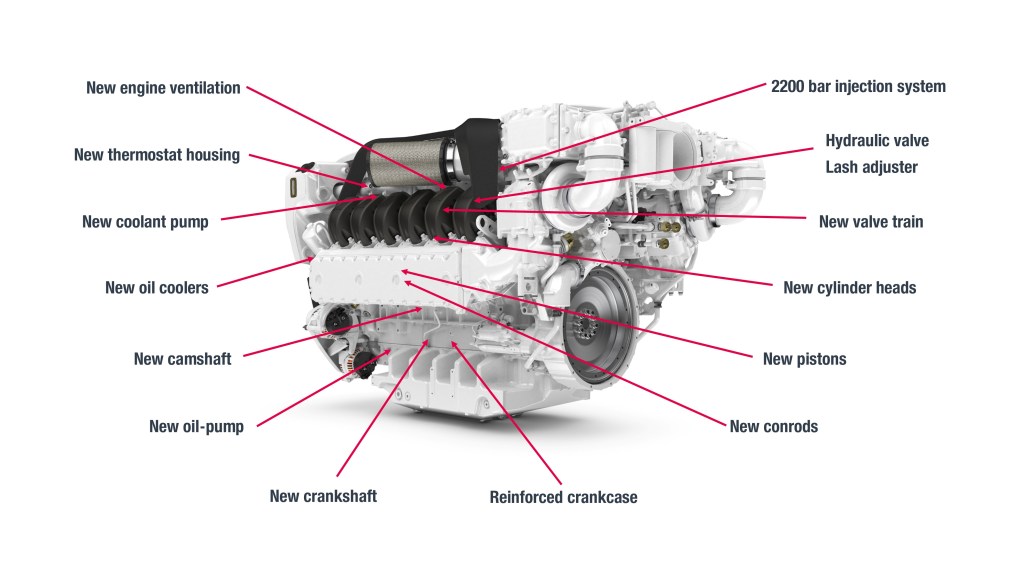
This new engine is based on an entirely new platform, drawing on the successes of the existing V12 series, which continues to deliver reliable performance for yachts requiring up to 2000 hp. To ensure the V12X meets the highest standards of durability and reliability, MAN’s engineers have implemented several key enhancements, including increased wall thicknesses in the crankcase, optimized bolt connections, and a new crankshaft with larger bearing diameters. These advancements are the result of extensive testing and real-world maritime trials.
Innovative Features for Enhanced Durability
The MAN V12X engine series introduces several innovations designed to enhance both performance and durability. The engine is built to handle a full-load share of up to 20%, thanks to improvements such as a new coolant pump, optimized thermostat housing, and an upgraded oil supply system.
In a first for MAN marine engines, the V12X includes hydraulic valve lash adjustment (HVA) as standard, which eliminates the need for regular valve lash checks and adjustments. The engine also features a new Common Rail injection system with an impressive 2200 bar injection pressure, which ensures low fuel consumption and meets stringent emissions standards.
Commitment to Sustainability
The MAN V12X engine series is not just about power—it also reflects MAN’s commitment to sustainability. The engine is designed to integrate with MAN’s hybrid system, the “MAN Smart HYBRID Experience,” offering a pathway to more environmentally friendly marine propulsion. Additionally, the engine’s modular exhaust gas aftertreatment system allows for flexible installation while minimizing maintenance, all while meeting the latest emissions regulations.
Compact and Powerful
Despite its high performance, the MAN V12X remains compact and lightweight, making it suitable for both new yacht builds and engine replacements. With its optimized design, this engine offers a superior power-to-weight ratio while requiring minimal space.
The MAN V12X engine is available in the V12X-2200 model, providing a powerful solution for yachts requiring between 730 and 2200 hp. This launch marks a new era in yachting, where cutting-edge technology meets unparalleled performance, offering yacht owners and builders the perfect balance of power, innovation, and sustainability.
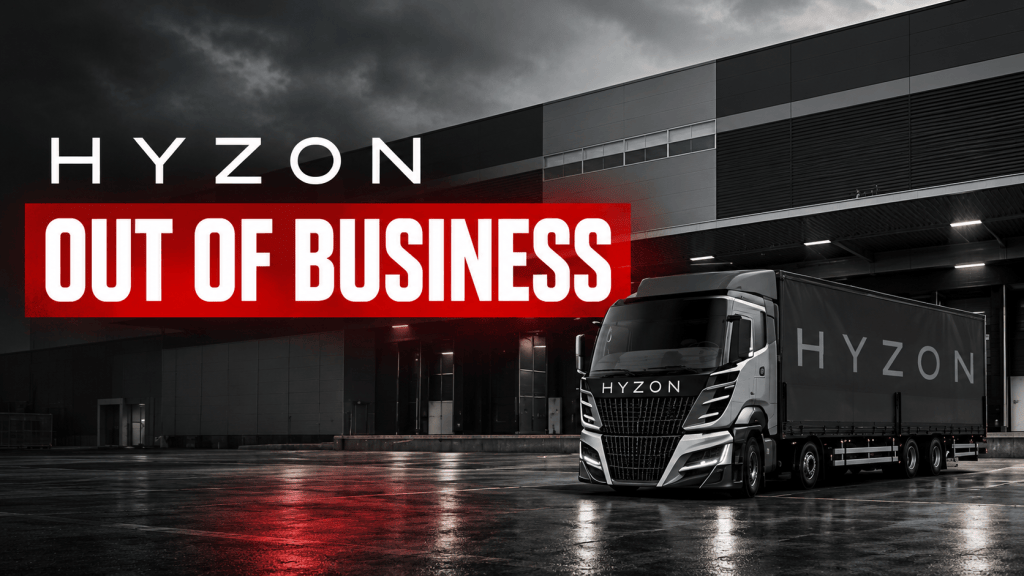
Updated October 2026: Hyzon Motors is no longer in business. In late March 2025, shareholders approved selling off the company’s assets and dissolving it, and its remaining assets went to liquidation. We’ve kept the original 2023 article below for the record. The lesson for technicians: new powertrains come and go, but diesel and natural gas are still the backbone of heavy-duty work, so those skills are still where the jobs are.
Introduction
There are few names in the zero-emission vehicle industry that have been creating as much buzz as Hyzon Motors. In the race towards a cleaner, greener future, this trailblazing company is at the forefront, harnessing the power of hydrogen fuel cells to revolutionize the transportation sector. With its pioneering hydrogen engines, Hyzon Motors is setting a new standard for clean energy, proving that sustainability and performance can indeed go hand in hand.
The Hyzon Motors Journey
Founded in 2003 as part of Singapore’s Horizon Fuel Cell Technologies, Hyzon Motors is a global leader in hydrogen energy. After two decades of research and development in fuel cell technology, the company was spun off in 2020 to focus on the production of zero-emission commercial vehicles. Headquartered in Honeoye Falls, New York, Hyzon Motors is geared towards the development of hydrogen fuel cell-powered heavy vehicles, a market niche with significant potential for reducing carbon emissions.
Hydrogen Engines: A Greener Future
Traditional combustion engines operate by burning fossil fuels, releasing harmful carbon dioxide into the atmosphere. Hyzon’s hydrogen engines, however, take a different approach. They utilize hydrogen fuel cells, which produce electricity through a chemical reaction between hydrogen and oxygen, to power the vehicle. This process results in water as the only byproduct, marking a significant departure from the pollutant emissions characteristic of traditional engines.
Moreover, the hydrogen used as fuel can be produced from a variety of renewable energy sources, making the entire life-cycle of a hydrogen-powered vehicle potentially carbon-neutral. This is the central appeal of Hyzon Motors’ technology: a complete, sustainable transportation solution that doesn’t compromise on power or range.
Hyzon Motors’ Offerings
Hyzon’s innovative lineup includes an array of heavy-duty vehicles, from trucks and buses to vans, powered by hydrogen fuel cell technology. With a focus on commercial applications, these vehicles are designed to offer similar, if not superior, performance to their diesel counterparts, but without the accompanying pollution.
These vehicles also address one of the major drawbacks of electric vehicles: long charging times. Hydrogen-powered vehicles can be refueled in a matter of minutes, comparable to conventional refueling times for gasoline or diesel vehicles. This makes them an ideal choice for commercial operations, where minimizing downtime is a priority.
Hyzon’s technology is not just limited to the engines. They have developed a comprehensive suite of technologies for the entire hydrogen ecosystem, including refueling infrastructure and hydrogen production methods. By considering the entire supply chain, Hyzon is working towards a future where hydrogen is a practical and accessible fuel source for all.
Conclusion
The future of transportation lies in zero-emission vehicles, and Hyzon Motors is at the vanguard of this shift. With their state-of-the-art hydrogen engines, they are transforming the way we think about commercial transportation, offering a truly green alternative that doesn’t compromise on performance or practicality.
As we look towards a future where sustainability is not just an option but a necessity, the work of companies like Hyzon Motors becomes ever more critical. Their hydrogen engines are a testament to the power of innovation and a beacon of hope for a cleaner, greener future.
Updated October 2026: The C13D is on track for full production in 2026. We added more details below.
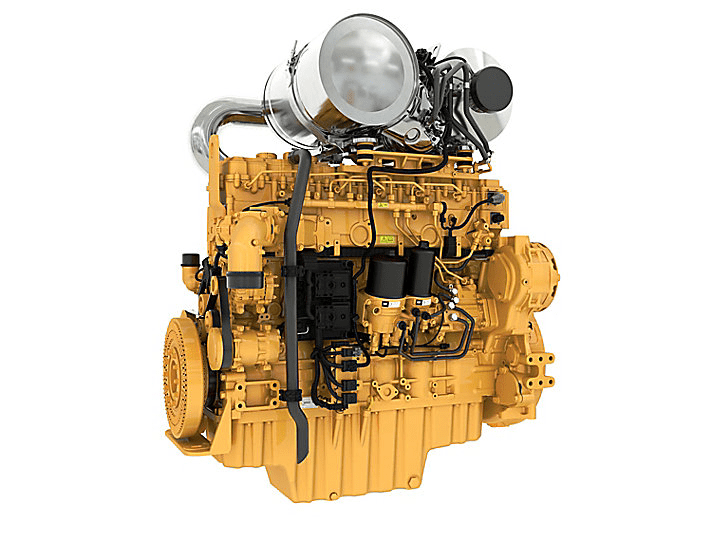
Caterpillar has introduced its new 13-liter diesel engine platform, the Cat C13D, designed for heavy-duty off-highway equipment such as rock crushers, screeners, and woodchippers.
The C13D engine offers eight power ratings from 456 to 690 hp and up to 3,200 Nm of peak torque. Available for early OEM pilots in 2025 and expected to go into production in 2026, the platform allows OEMs to downsize the engine and simplify their design, assembly, and supply chain requirements.
Caterpillar will offer factory-mounted engine aftertreatment and cooling packs to reduce installation and validation costs for its C13D engine. The engine meets emissions standards in highly regulated markets and offers up to 20% more power and up to 25% more low-speed torque than previous Cat engines in its power class. It features a variable geometry turbocharger, a common-rail fuel system with ‘zero static leak’ fuel injectors, and an 18:1 compression ratio. The engine platform can use renewable fuels and is designed to accommodate future development of natural gas and hydrogen fuel capabilities.