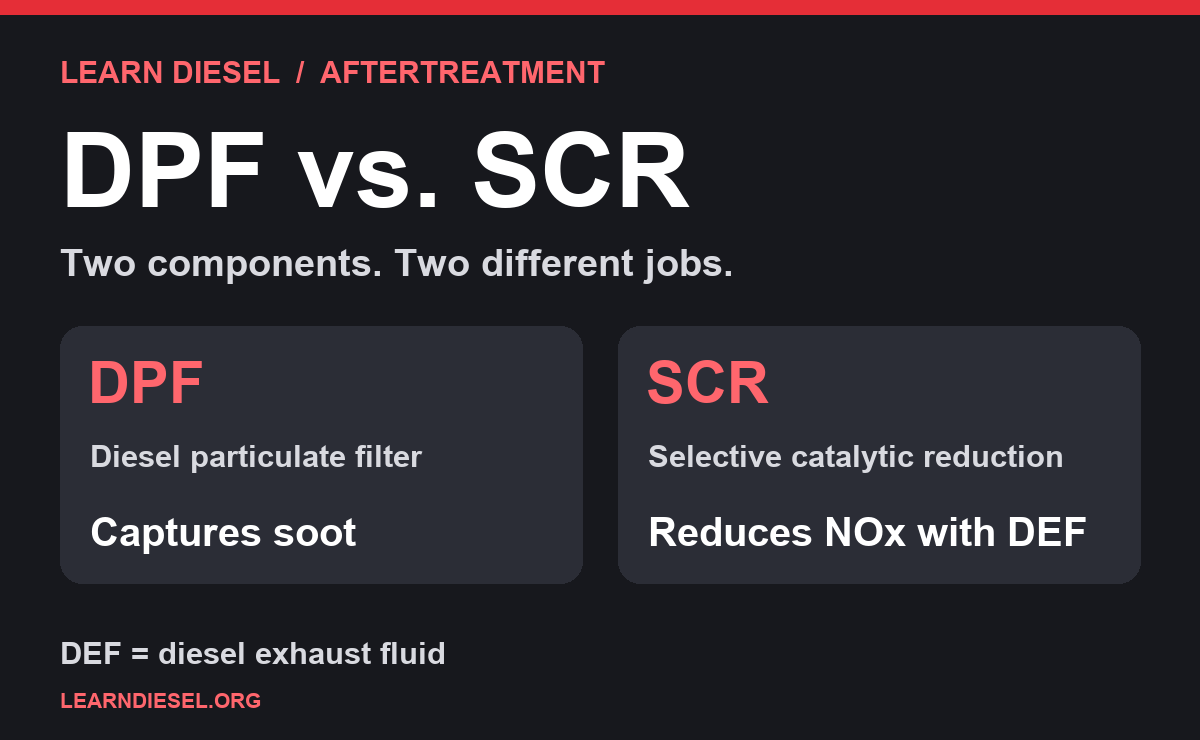
The diesel particulate filter (DPF) captures soot. Selective catalytic reduction (SCR) reduces nitrogen oxides (NOx). Both treat diesel exhaust, and knowing which job belongs to which component helps you choose the right diagnostic path.
What the DPF does
The filter traps soot as exhaust passes through it. Regeneration uses heat to oxidize accumulated soot. Ash remains and needs periodic service according to the manufacturer’s maintenance schedule. When a truck reports a filter restriction, verify the conditions behind the reading and follow the engine maker’s diagnostic procedure.
Where DEF and SCR fit
Diesel exhaust fluid (DEF) is dosed into the exhaust before the SCR catalyst. In hot exhaust, DEF supplies ammonia that reacts with NOx over the catalyst, forming nitrogen and water. The Cummins system layout shows the diesel oxidation catalyst and filter ahead of DEF dosing and SCR.
How to apply the distinction
When working through a fault, record what the system is monitoring and the conditions when the warning appeared. A filter restriction concern and a NOx conversion concern point to different diagnostic procedures. Use service information for the truck and engine in front of you.
Studying for ASE T2? Try the Diesel Engines questions on the Learn Diesel ASE Practice Tests page.



Leave a Reply